There are many ways to mark the loss of a dog or cat, and no single one is the right one. This page covers the full range honestly: what each option is, what it costs in rough terms, who it suits, and what its limits are. Some of these things we make at Small Goodbyes. Most of them we don't. The aim is to help you decide what's right for your household, not to sell you something specific.
Pet memorial ideas at a glance
A paw-print impression, the physical shape of them, and the only thing here with a deadline. A memorial stone or garden plaque, an outdoor spot that was theirs. Memorial jewellery holding a little of the ashes. A framed photograph. A tree or a rose, which changes with the seasons instead of staying still. A donation in their name. A memory box you assemble yourself. And a painted portrait, which is the thing we make. Each one is covered below, with what it is actually for and what its limits are.
An earlier version of this page put a price range next to each idea. We have taken them off. They were not sourced to anybody, this trade varies enormously by supplier and region, and a number nobody can stand behind is worse than no number, particularly on a page somebody reads in the first week. Where we could source a price to a published page, it is quoted below with the link and the date.
A paw-print impression
A cast or ink impression of your pet's paw is one of the most intimate memorials available, because it captures something physical and irreplaceable. The texture of a pad, the spread of the toes: no photograph gives you that.
Timing matters here more than with anything else on this list. An impression from a living animal can be taken any time, and if your pet is elderly or unwell, it's worth doing now rather than waiting. After death, the window is short: typically a day or two if the animal is kept cool. Some veterinary practices offer this as a service, and mobile pet memorial services will come to your home. You can also buy impression kits to do it yourself.
A DIY kit costs a few pounds; a professional cast mounted in clay or resin costs more, and we have not found a published UK price list we could cite for it, so ask your vet or a mobile memorial service directly rather than taking a range off a page like this one. The result is something no other memorial can replicate.
A memorial stone or garden plaque
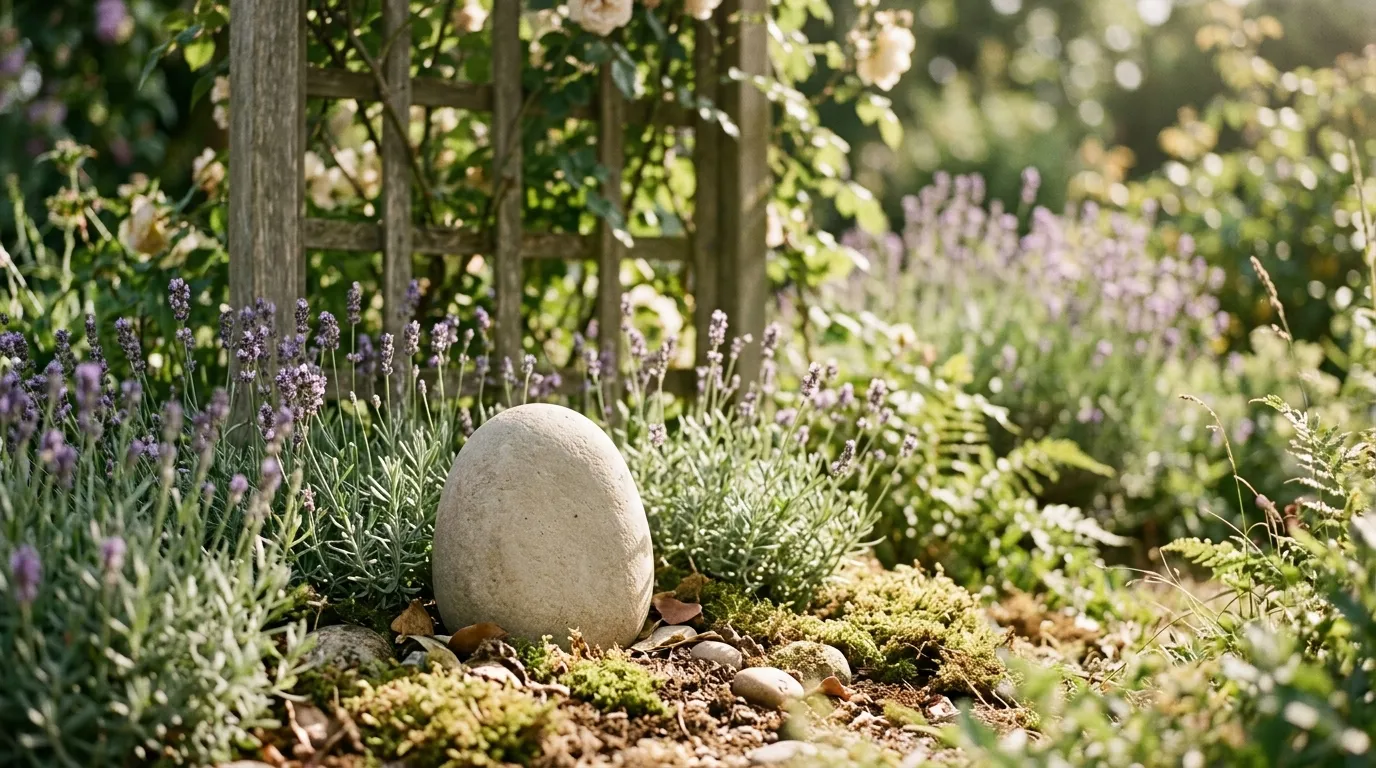
A stone with a name, dates, and a short line of text gives grief somewhere specific to go in the physical world. Many families place one in the garden near where their dog liked to sit, or where a cat had a favourite patch of sun. There's something right about that: the memorial occupying a space the animal actually used.
Slate is the most common material in the UK, typically engraved with a name and dates, sometimes a line of text. Price depends almost entirely on the size of the stone and the length of the inscription, and small engravers rarely publish a list, so expect to ask for a quote. What is worth checking before you order is how the lettering is cut: a laser-etched surface and a properly incised one weather very differently outdoors.
Memorial jewellery
A pendant, ring, or charm that incorporates your pet's ashes, or sometimes a small amount of fur, is a way of keeping them close in a literal sense. Prices vary far too much between makers for a range to be useful, and we could not source one, so treat any figure you see quoted online with suspicion, including ours if you find an older copy of this page.
It's worth finding a maker who works specifically with cremation ashes and can show you examples of their finished work. An established UK maker who can show real examples and explain exactly how the ashes are handled is a safer starting point than the cheapest option you find.
A framed photograph
The simplest and most immediate option. A good photograph, printed at proper scale and framed well, can be powerful. Most people already have the photograph. The work is in choosing the right one: not the most recent, not the most technically perfect, but the one that catches them as you knew them.
The limit of a photograph, as a memorial, is that it shows what they looked like but doesn't say who they were. That's a real limit. It's also why some families want something alongside the photograph: a canvas portrait that captures the character rather than just the image.
Planting a tree
A living memorial is different in quality from an object. A tree grows, changes with the seasons, gives shade, attracts birds. The Woodland Trust's tree dedication scheme asks a suggested donation of £20 for a single tree and £250 for a quarter acre of woodland, each with a certificate and a personalised message, read on 3 September 2026. That is a dedication rather than a tree you plant yourself, which some families prefer and others do not.
A donation in their name
Making a donation to an animal welfare charity in memory of a pet is a way of turning loss into something outward-facing. The RSPCA, Battersea Dogs and Cats Home, the Blue Cross, or a breed-specific rescue charity: any of these will accept a tribute donation and issue an acknowledgement you can keep.
A memory box
A memory box, holding a collar, a favourite toy, a small jar of fur, a printed photograph, a handwritten note, is one of the most personal memorials because you assemble it yourself, and it costs whatever you decide to spend on the box. A shoebox does the job. What matters is writing down, now, why each thing is in there, because in ten years nobody will remember why the blue toy was the important one.
What we make, and how it sits alongside these
At Small Goodbyes we make one thing, a painted portrait worked from a photograph you already have. None of the options above replace it, and it doesn't replace them. They occupy a different register. The stone lives in the garden. The jewellery lives on your wrist. The canvas lives on the wall: it's the thing you see every morning, the image that sits with the household long-term.
Most families who order from us already have, or are also getting, one of the physical options above. The portrait and the stone do different things. So do the portrait and the paw print. They're not in competition.
The canvas portrait is produced in a painted style from the photograph you send: not a filtered print, but an image that looks considered rather than mechanical. We use AI tools to draft and illustrate, and you accept the painting on screen before you pay. If what comes back doesn't feel right, you don't accept it, and nothing is printed or charged.
Choosing more than one
Many families end up with two or three things from this list, not because grief demands it, but because different objects serve different purposes. A stone for the garden. A portrait for the wall. A memory box tucked away. That's not excess. It's recognising that a ten-year relationship with a dog or cat is not a single-object loss.
Start with what feels most urgent. If you're in the first days, a paw-print impression is the only thing with a hard deadline. Everything else can wait. There's no correct pace for this, and no correct set of objects. You'll know what's right when you find it.
The rest of this stage takes the practical decisions one at a time: what cremation actually costs, what to do with the ashes once they come back, grave markers and a stone in the garden. The whole stage is here.
Written by Craig Fearn, Small Goodbyes. Last updated .