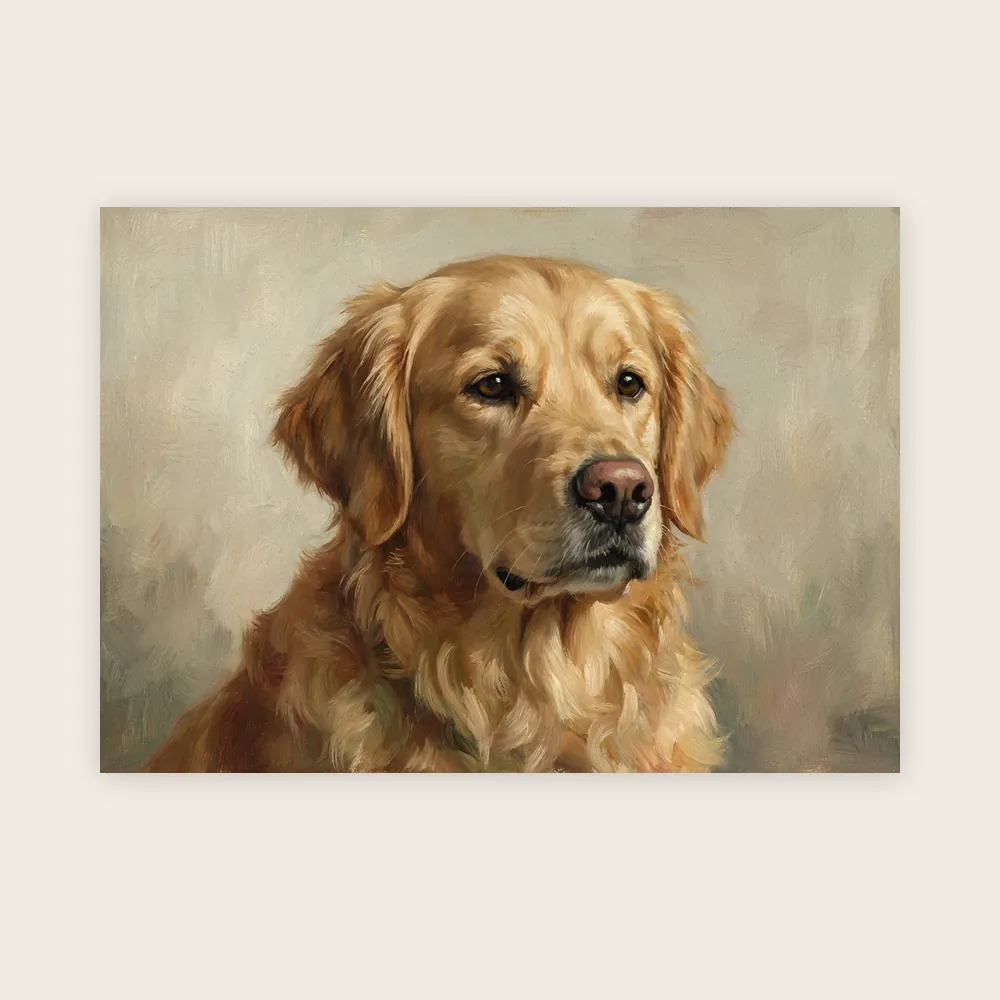
Dogs leave a particular kind of silence when they go. They were always somewhere in the house, by the door when you came home, at your feet during supper, two steps behind you up the stairs. A dog memorial isn't about closure. It's about keeping that shape of them somewhere you can reach for.
Each Small Goodbyes portrait comes in oil, watercolour, charcoal, line or pastel, with a free preview before you pay, and is made to order for your dog. If a friend has lost their dog, see our dog memorial gifts.
What makes a dog memorial work
The specific details are what carry it. Not "he was a good boy" but "he used to line up the slippers by the back door like he was trying to tell me something". Not "she loved walks" but "the exact patch of sun she claimed at two in the afternoon".
The portrait is built around what you share. It won't sound like a generic pet obituary because it isn't one.
Any breed, any age, any story
A memorial can be for an old Labrador, a young whippet cut short, a rescue whose history you only half knew, a working collie, a family mongrel or a show dog. Any breed, any age. The portrait is made from the photo you send.
For a gift
Plenty of people order one for a parent, a friend or a partner. You'll need a photo of their dog, and if you don't have one, their family usually will. Send it straight to them as a gift, with no prices in the parcel: our dog memorial gifts page explains how. It's a simple way to say you saw what they lost.
It takes 4 to 9 working days to arrive. UK delivery is included.
If your dog has just died
The practical questions arrive faster than the emotional ones, and most dog owners haven't had to think about them before. The short version: phone your vet first, even at night, because most practices pass calls to an out-of-hours vet. After that there is time. You can keep your dog at home in a cool room for some hours while everyone says goodbye, and you don't have to choose between burial and cremation straight away.
Our guide to what to do when your dog dies takes it step by step: keeping them at home, burying them in the garden or arranging a cremation, the fur clipping or paw print that has to be taken first, and the microchip and insurance records to close afterwards. The Blue Cross Pet Bereavement line, 0800 096 6606, is free and specific to pet loss, whenever you need it.
Honouring a dog that has passed away
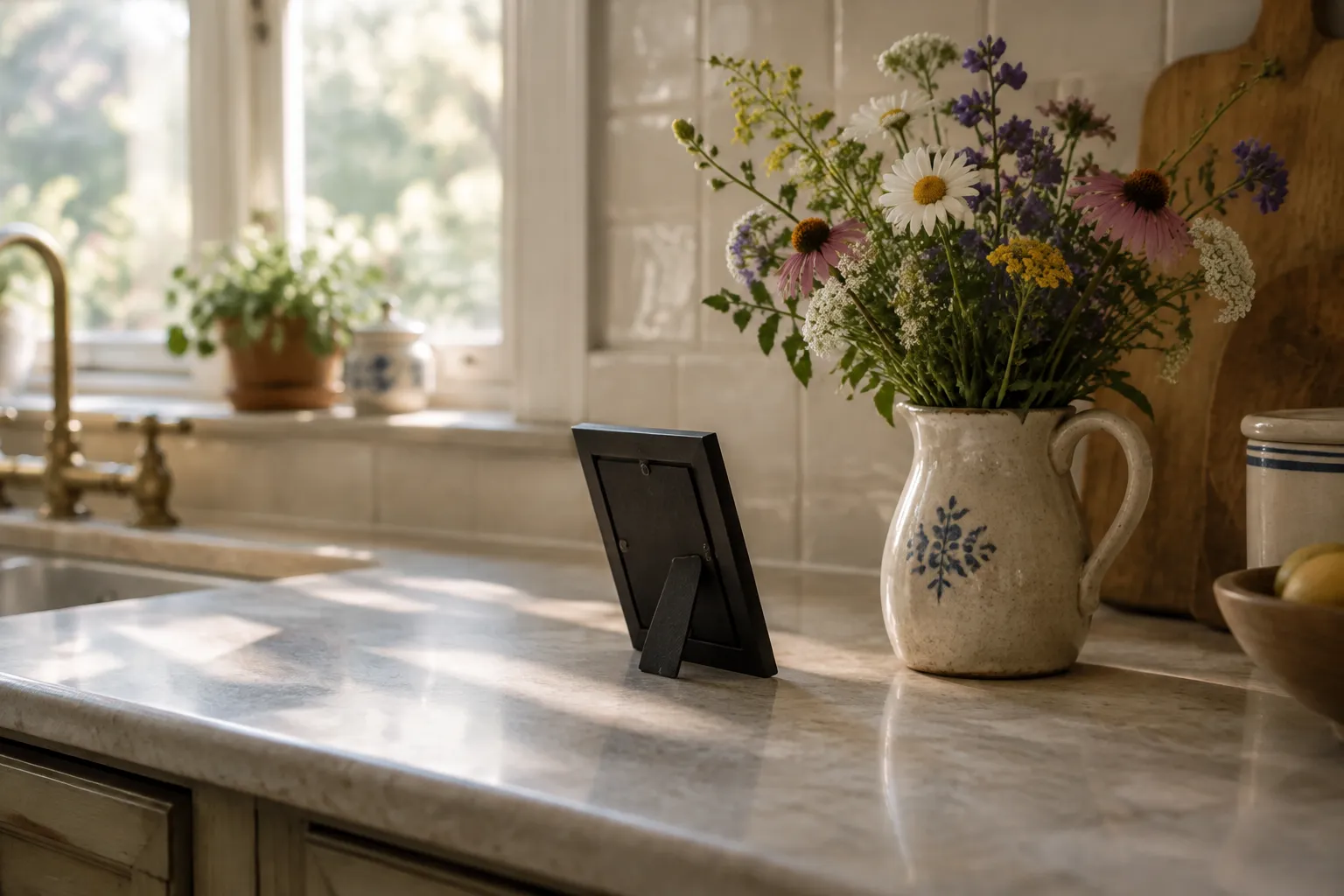
Beyond the canvas, there are smaller things families do: a photograph in a frame on the kitchen counter where their bowl used to be; a paw-print taken in clay before the cremation; a tree planted in the garden over a buried collar (our dog memorial garden ideas covers more); a charity donation in their name on the anniversary; the name added (gently, in pencil) to the list at the back of a family bible. The point of any of these is not to fix the loss. It's to give the loss somewhere to live in the household, somewhere visible, somewhere acknowledged, somewhere it isn't pretended away.
A small ceremony at home, with whichever family members were closest to the dog, can be enough. Light a candle. Read a eulogy aloud, short or long (we have a guide for writing one). Pass the collar around. Say their name. Then sit, briefly, in the quiet that follows.
Memorial quotes for a dog
A short borrowed line is sometimes the right size for a card or a tribute caption. A few that hold their shape:
- "Dogs do speak, but only to those who know how to listen.", Orhan Pamuk
- "Until one has loved an animal, a part of one's soul remains unawakened.", Anatole France
- "Old dogs, like old shoes, are comfortable. They might be a bit out of shape and a little worn around the edges, but they fit well.", Bonnie Wilcox
- "He was the best of dogs. He was the best of dogs because he was ours," written by us, freely usable; mostly a reminder that you don't need a quote.
Dog memorial portraits by breed
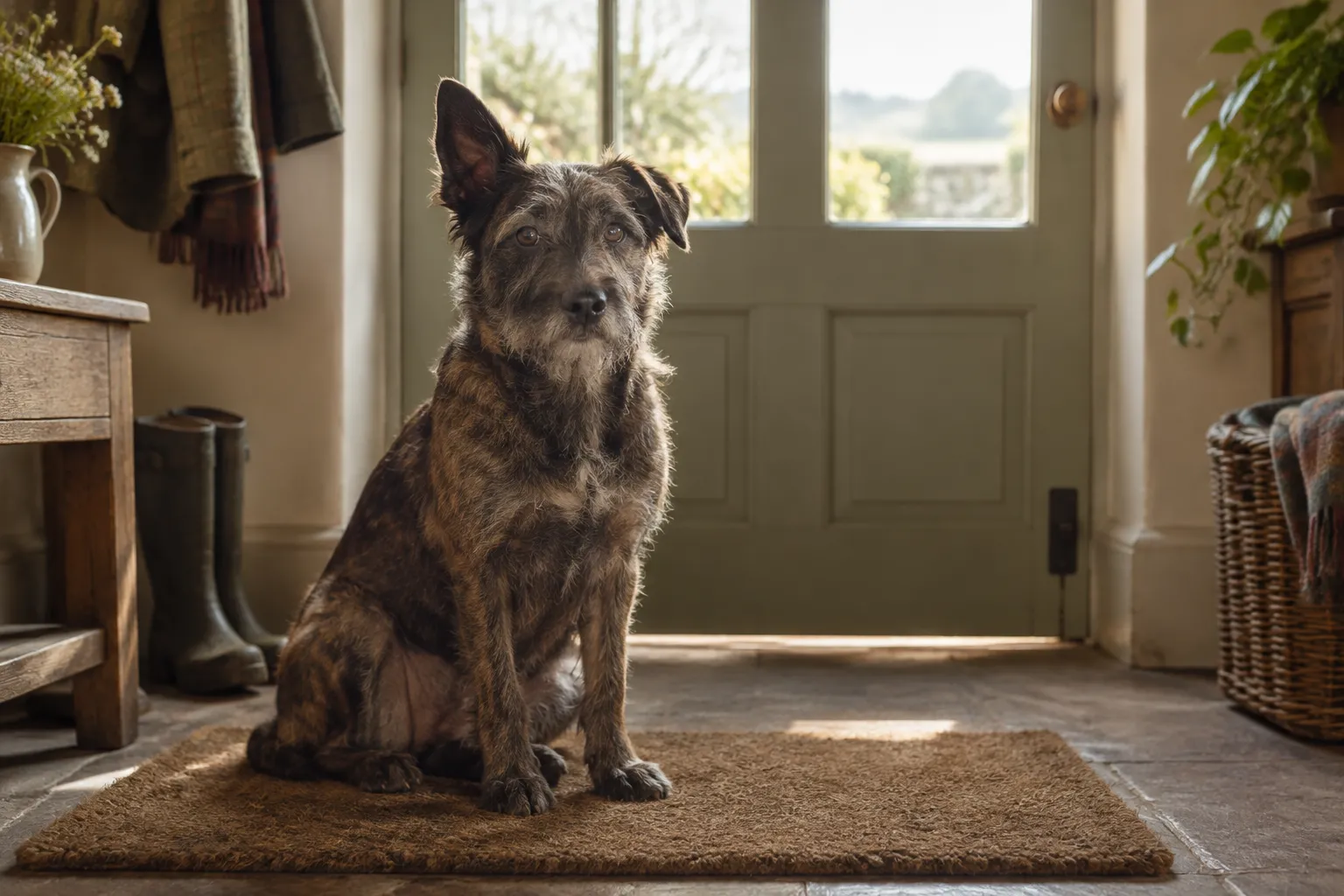
Some people find it easier to start from the breed. Ten breeds have a longer page of their own: the Border Collie, English Bulldog, French Bulldog, German Shepherd, Jack Russell, Labrador, Pug, Shih Tzu, Staffordshire Bull Terrier and Yorkshire Terrier. Below are twenty-one more, each with what owners tell us they remember and what to look for in the photo. Crossbreeds and rescues are just as welcome; the portrait is made from your photo, whatever the dog.
Beagle
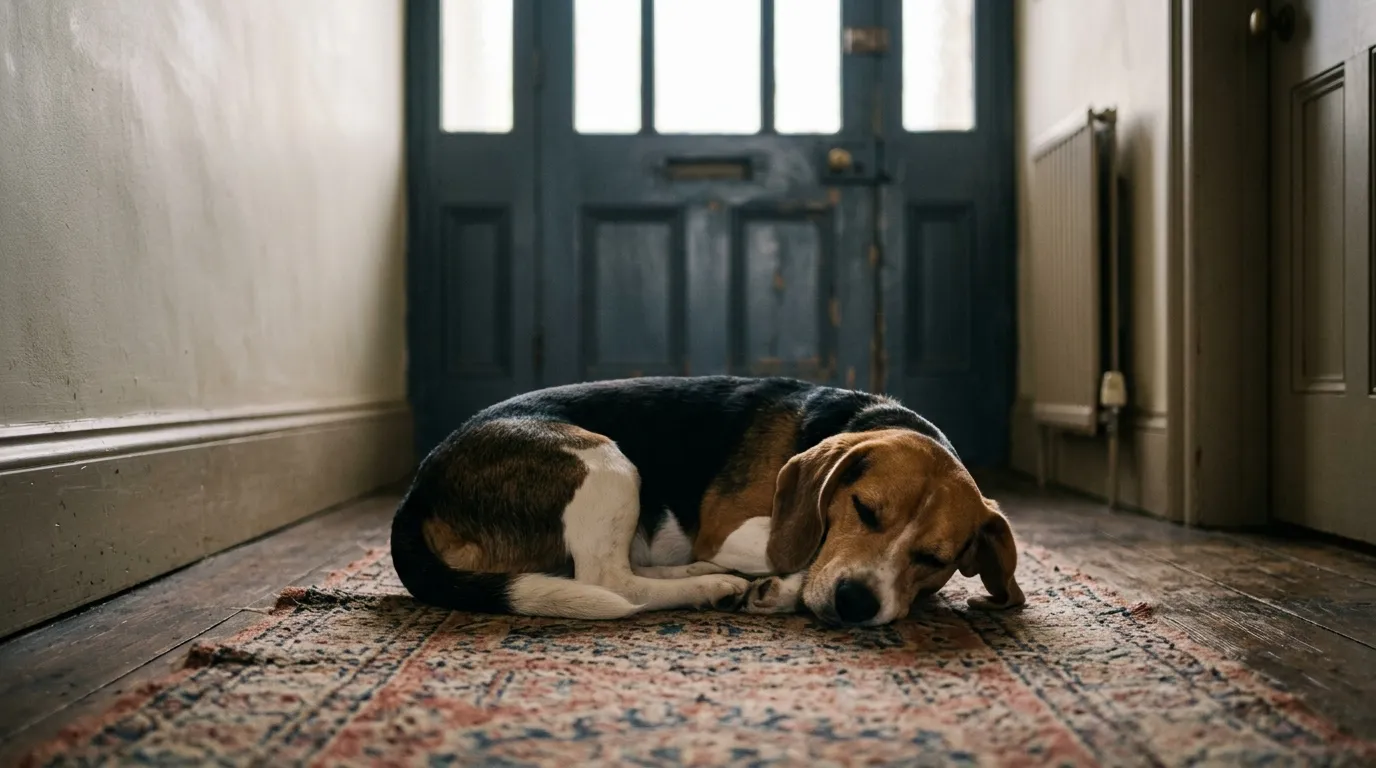
Beagle owners talk about the nose first. It led every walk, and any plan you had for the afternoon went where it went. Then there's the bay, the long ringing call bred to carry across a field to the rest of the pack, which in a terraced house carries a lot further than the neighbours would like. Beagles often live to thirteen or fourteen, so many families lose one who saw the children grow up. Tricolour, lemon and white, or red and white, the portrait works from any photo where you can see their face.
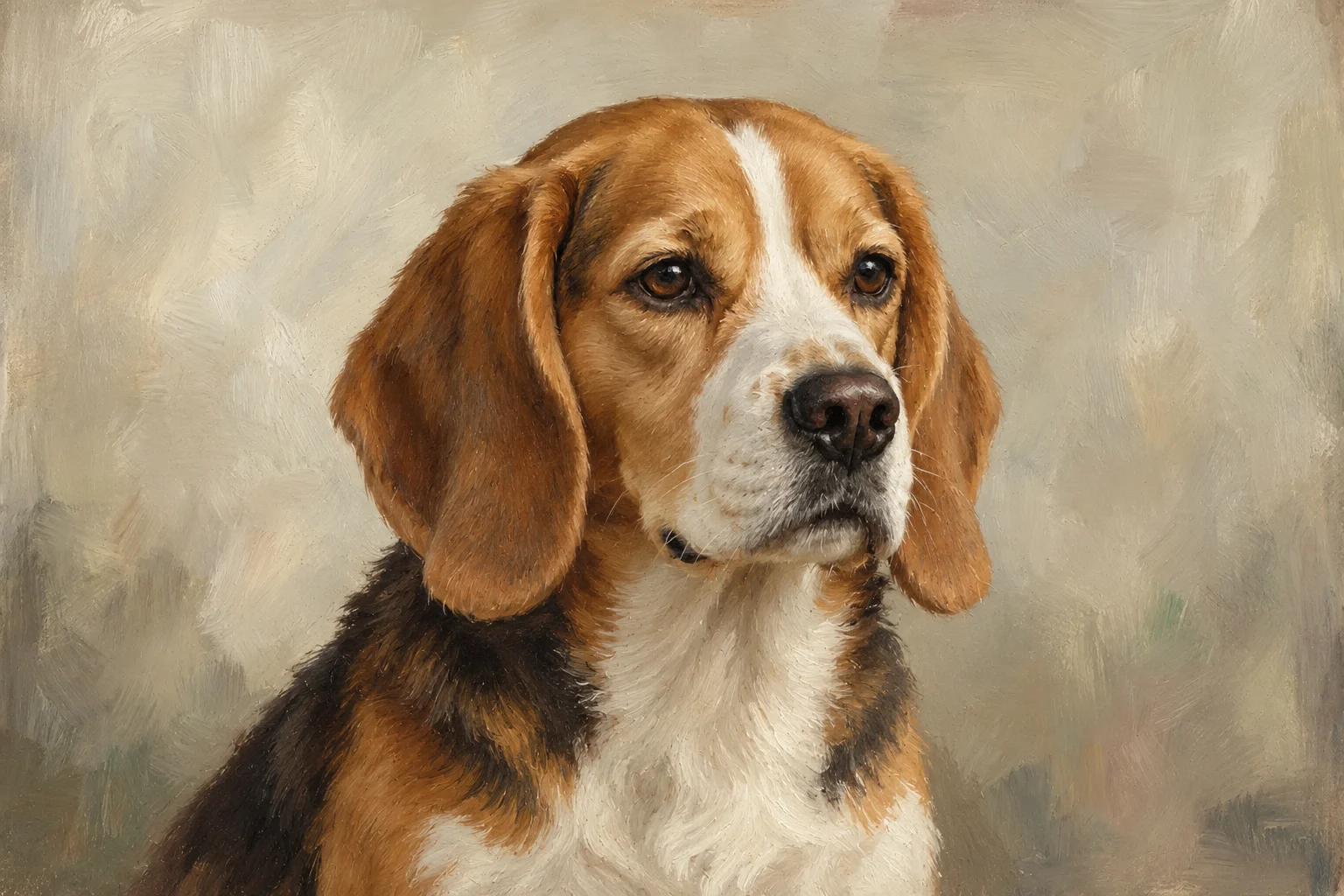
Bichon Frise
Bichons were bred for company and nothing else, and it shows. They're pleased when you get up, pleased when you sit down, and happiest on your lap. Owners remember the sudden mad dash round the kitchen that meant nothing in particular. They often live twelve to fifteen years, so a Bichon may have been with you through a house move or two. The white coat with black eyes and nose makes a clear, bright face, so pick the photo where the expression is most like them.
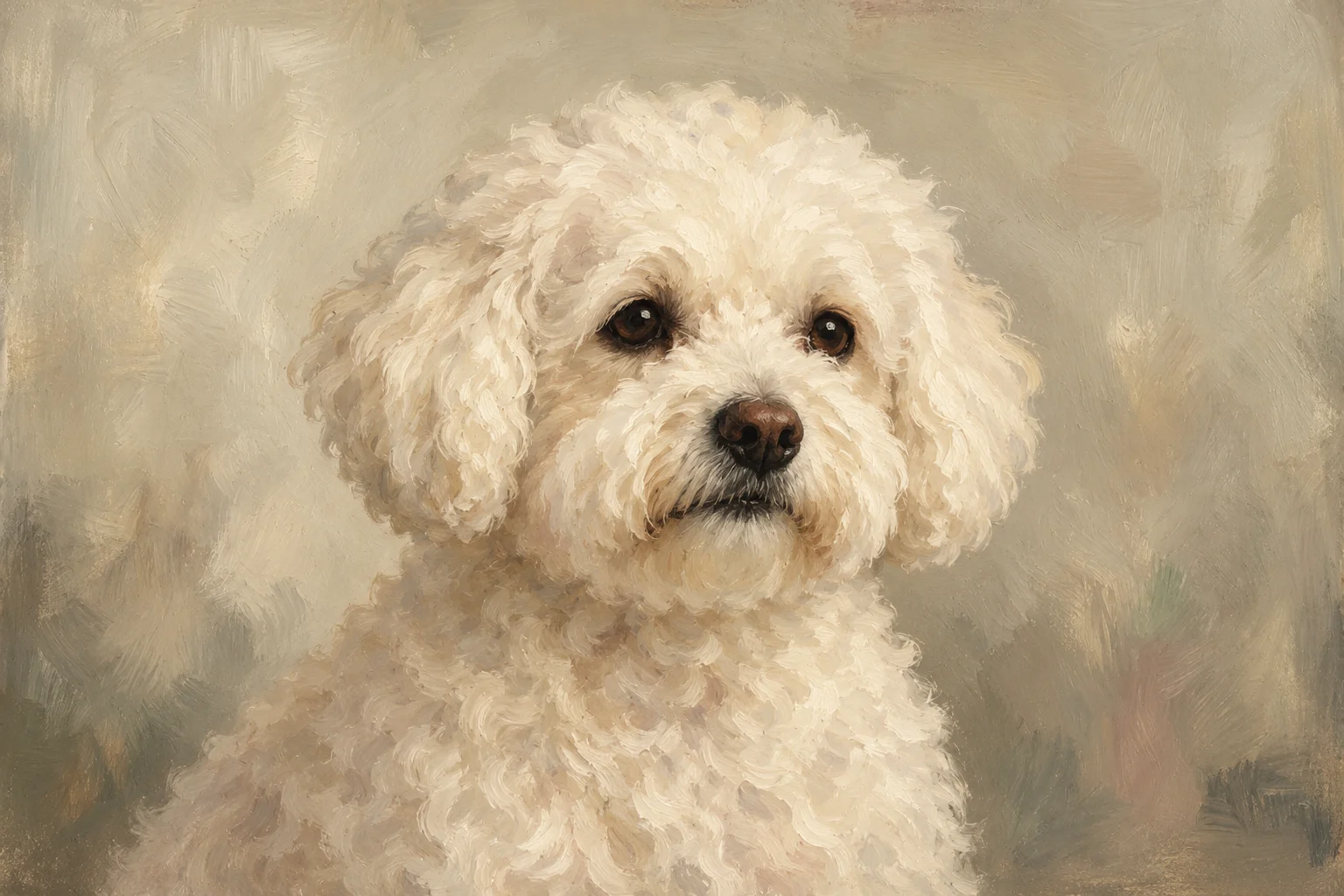
Border Terrier
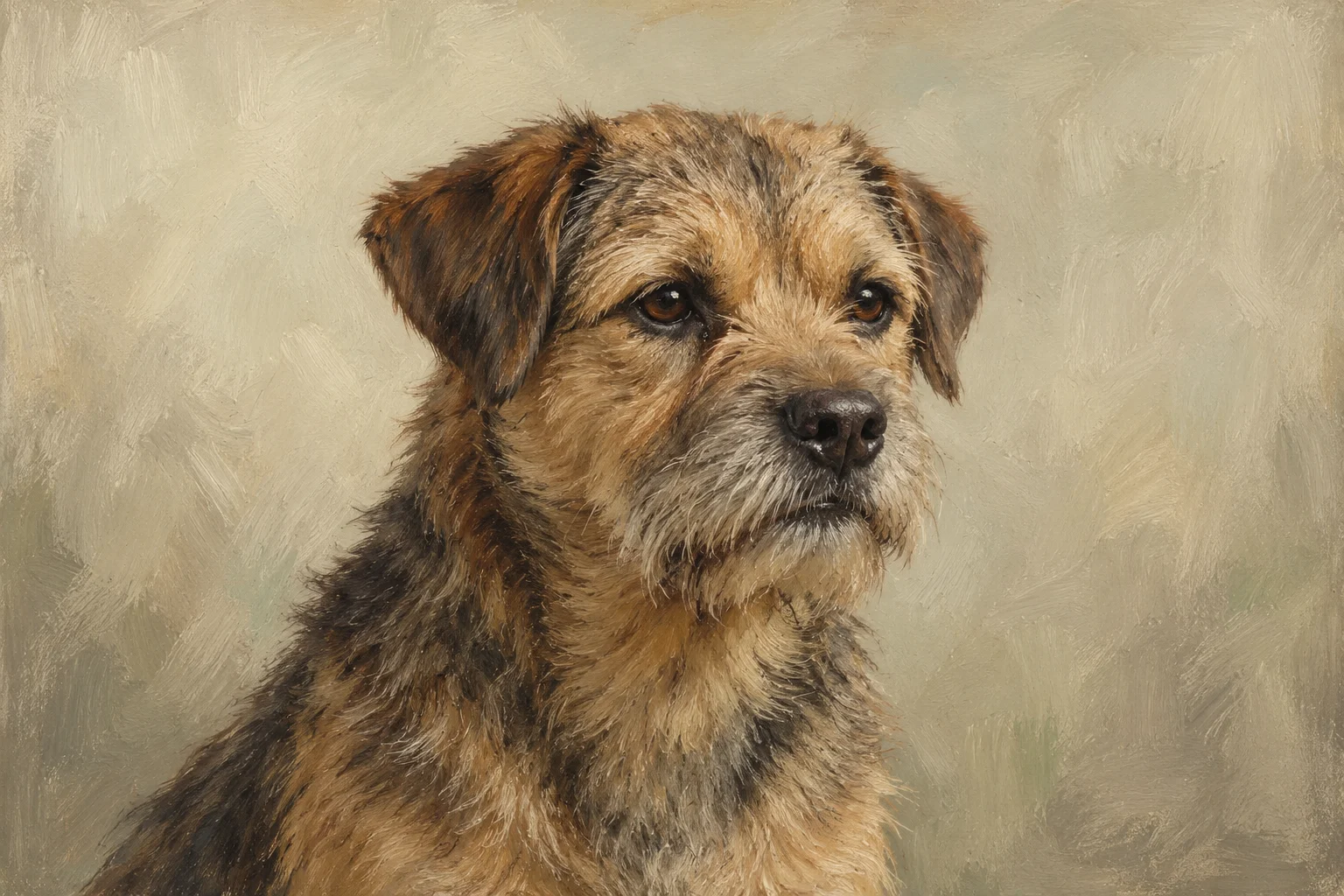
Small, scruffy and tougher than they look. Border Terriers were bred to keep up with horses across the border country and to go to ground after foxes, and nobody ever told them they were small. Indoors they're soft: on your feet while you work, on your lap given half a chance. People who haven't had one are surprised by how big the gap is. In a portrait it's the otter-shaped head that people know at once, with the grizzle and tan coat around it.
Boxer
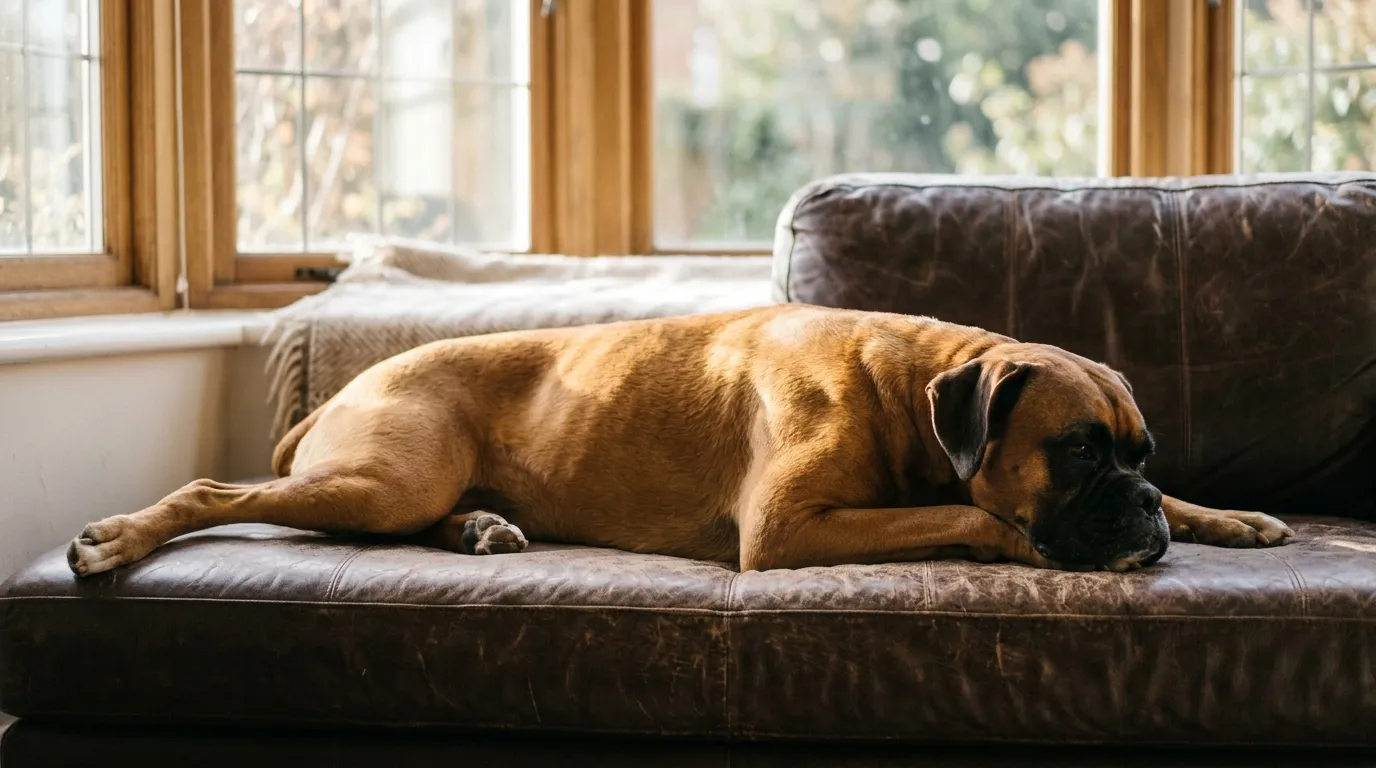
The greeting is what most Boxer owners mention: the whole back end swinging round so far it nearly meets the front. Add the wrinkled brow, the underbite and the sparring with their front paws, and you had a big, strong dog who spent most of their energy being daft. Boxers are one of the breeds more prone to cancer, and many are lost before ten. If yours went young, the portrait can show them at their best, from whichever photo still makes you smile.
Cavalier King Charles Spaniel
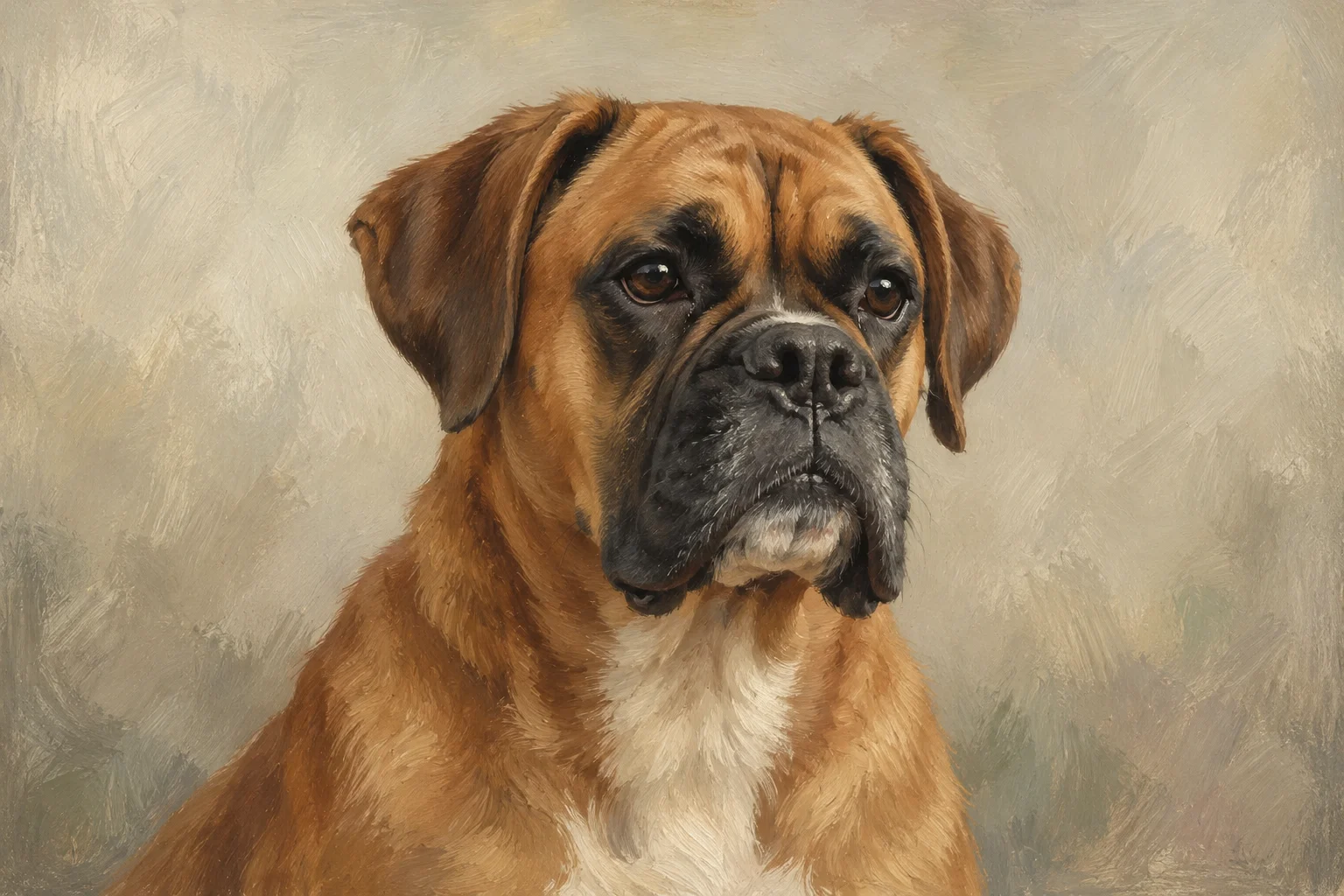
A Cavalier's whole job was to be near you, and they took it seriously: the warm spot on the sofa, the crook of your arm, the side of your leg. Many owners lose them younger than they hoped. Cavaliers are one of the breeds worst affected by mitral valve disease, a heart condition that often shows by middle age. Blenheim, tricolour, ruby or black and tan, the long ears and big dark eyes come through well in any of the five painted styles.
Cavapoo
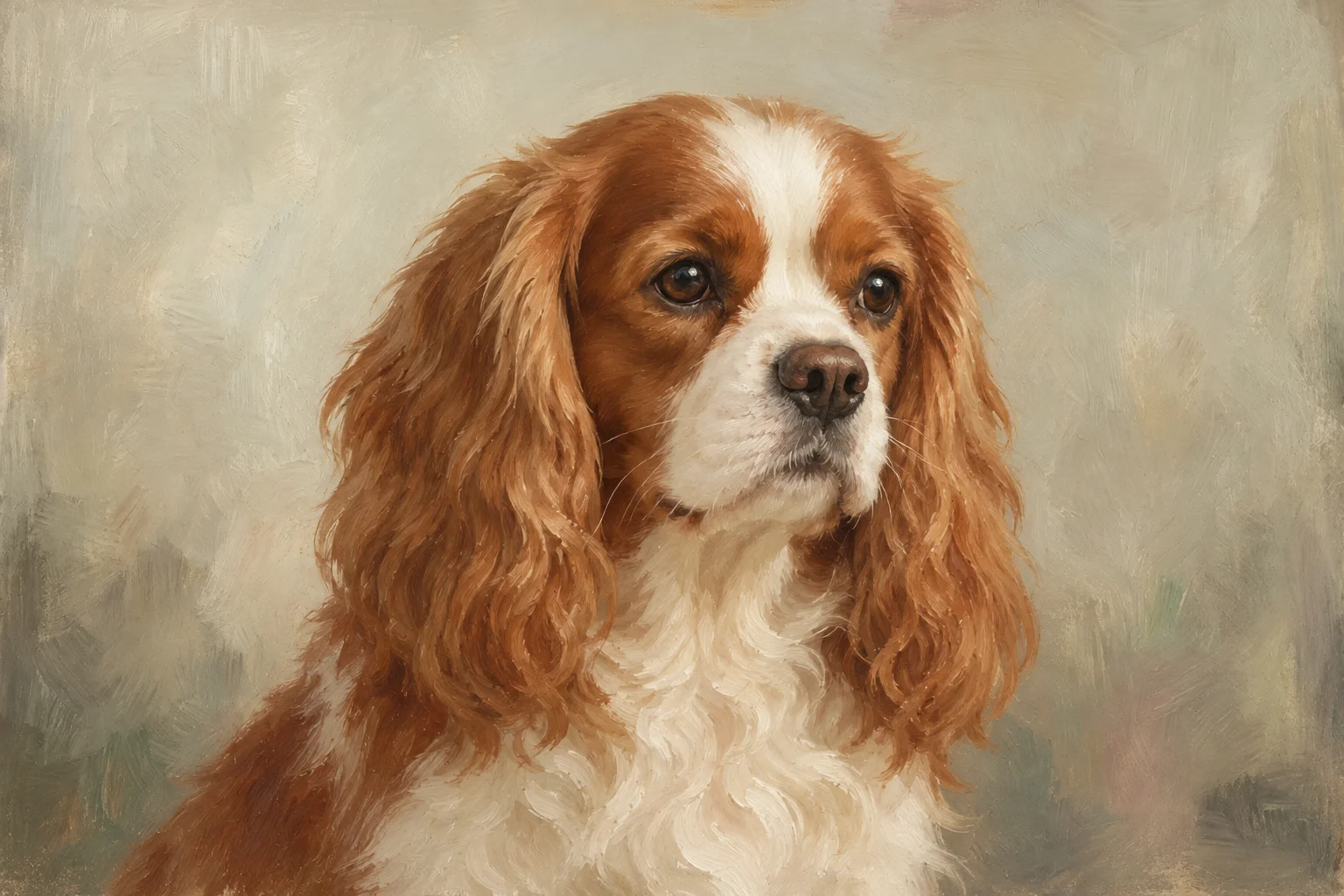
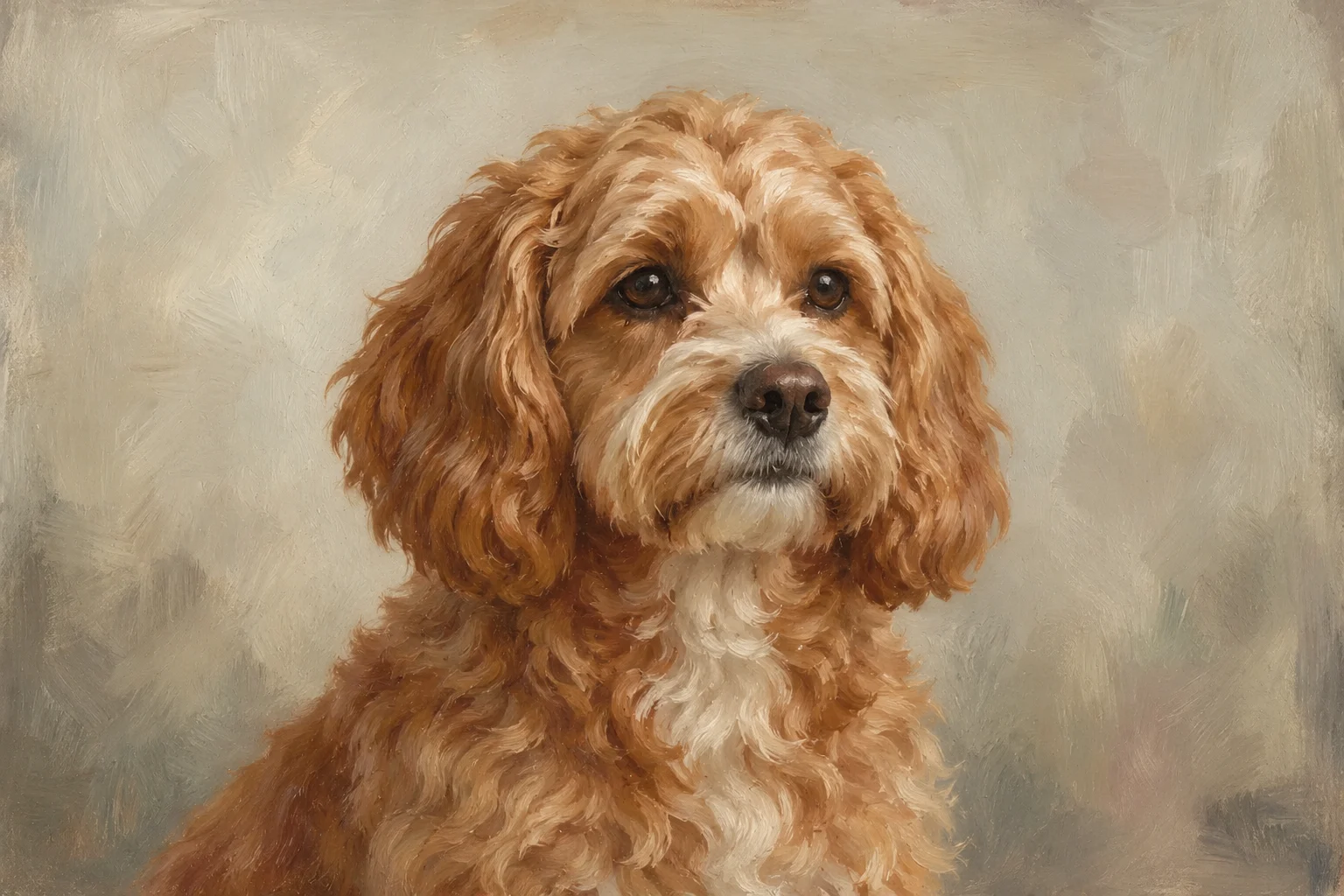
Half Cavalier, half Poodle, and nearly always within arm's reach. Cavapoos find the exact gap between your feet under the desk, or the dip in the duvet, and settle in as if it was always theirs. They're quick to notice when you're low. Coats run from tight Poodle curls to soft Cavalier waves, and from cream through apricot to deep red, so we paint the dog in your photo, not the dog in the breed books.
Chihuahua
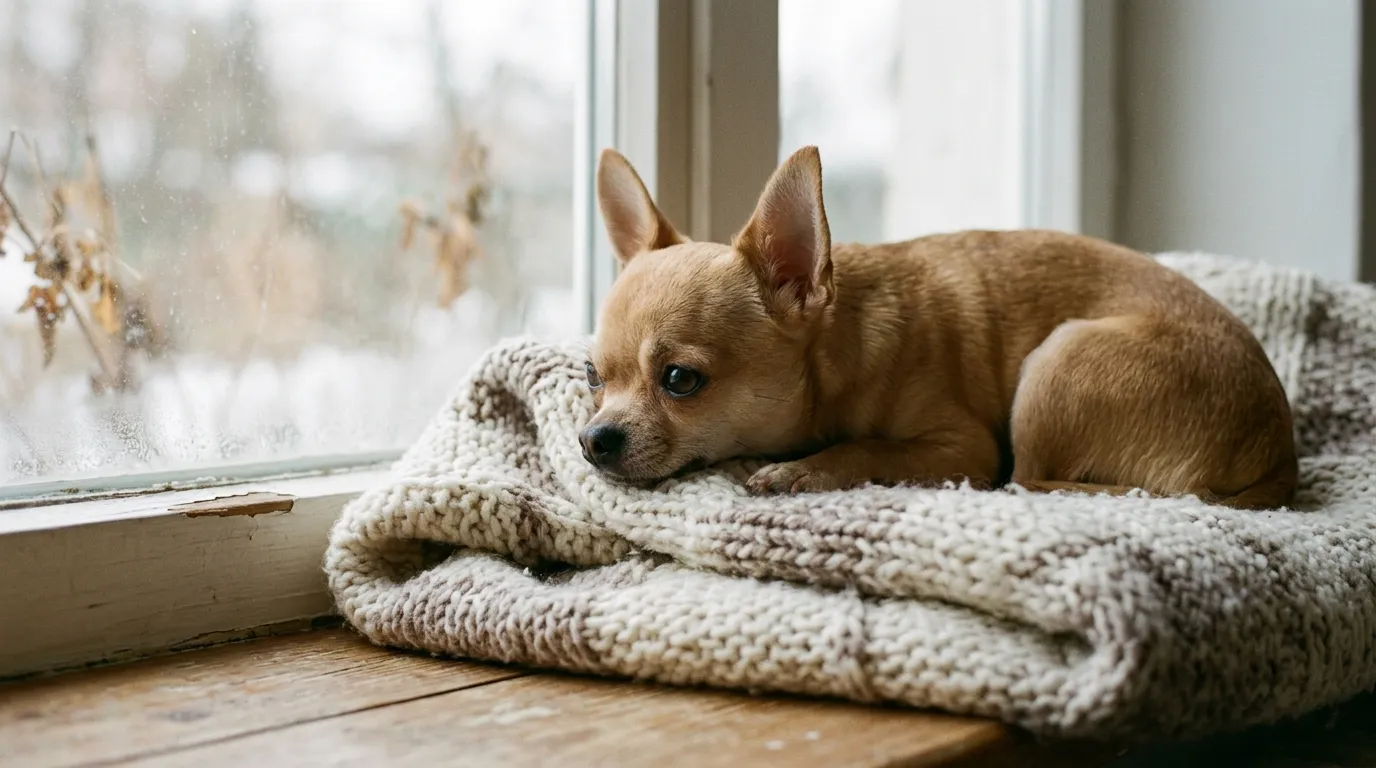
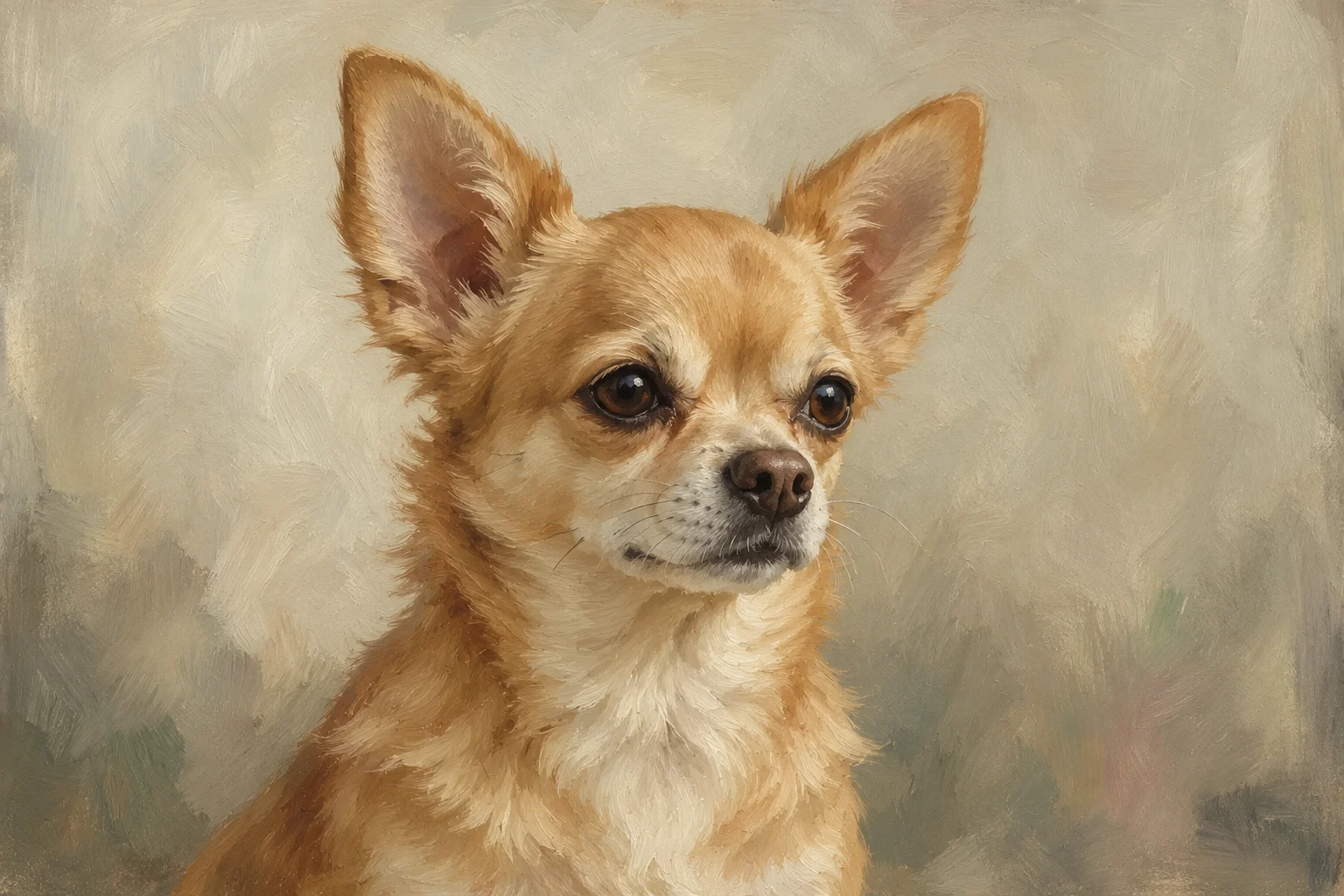
Light enough to carry in one hand, and still the one who ran the house. Chihuahuas tend to pick one person and stick to them. They burrow under jumpers, into cushions and down the bed at night, and they shiver when they're excited as much as when they're cold. They also had a look, when you were late home, that was cross and relieved at once. A close photo of the face, with the big eyes and ears, makes the best portrait.
Cockapoo
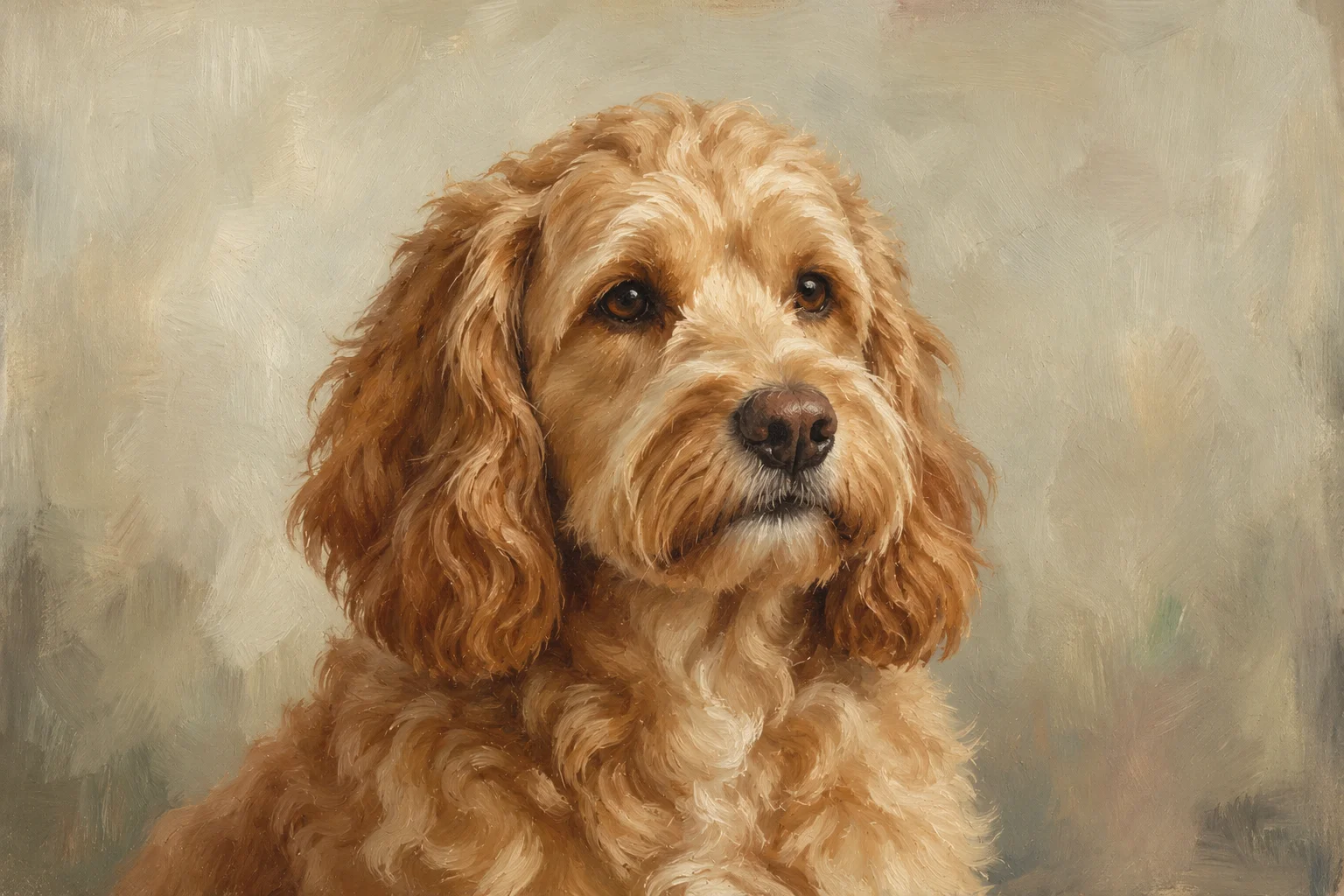
Cockapoos stay close: the same end of the sofa, under your feet in the kitchen, pressed against your leg wherever you sit down. They come and find you when a room has gone silent for too long. As a cross of Cocker Spaniel and Poodle, no two look quite alike, from tight apricot curls to loose chocolate waves, and some are twice the size of others. The portrait follows your photo, curls and all.
Cocker Spaniel
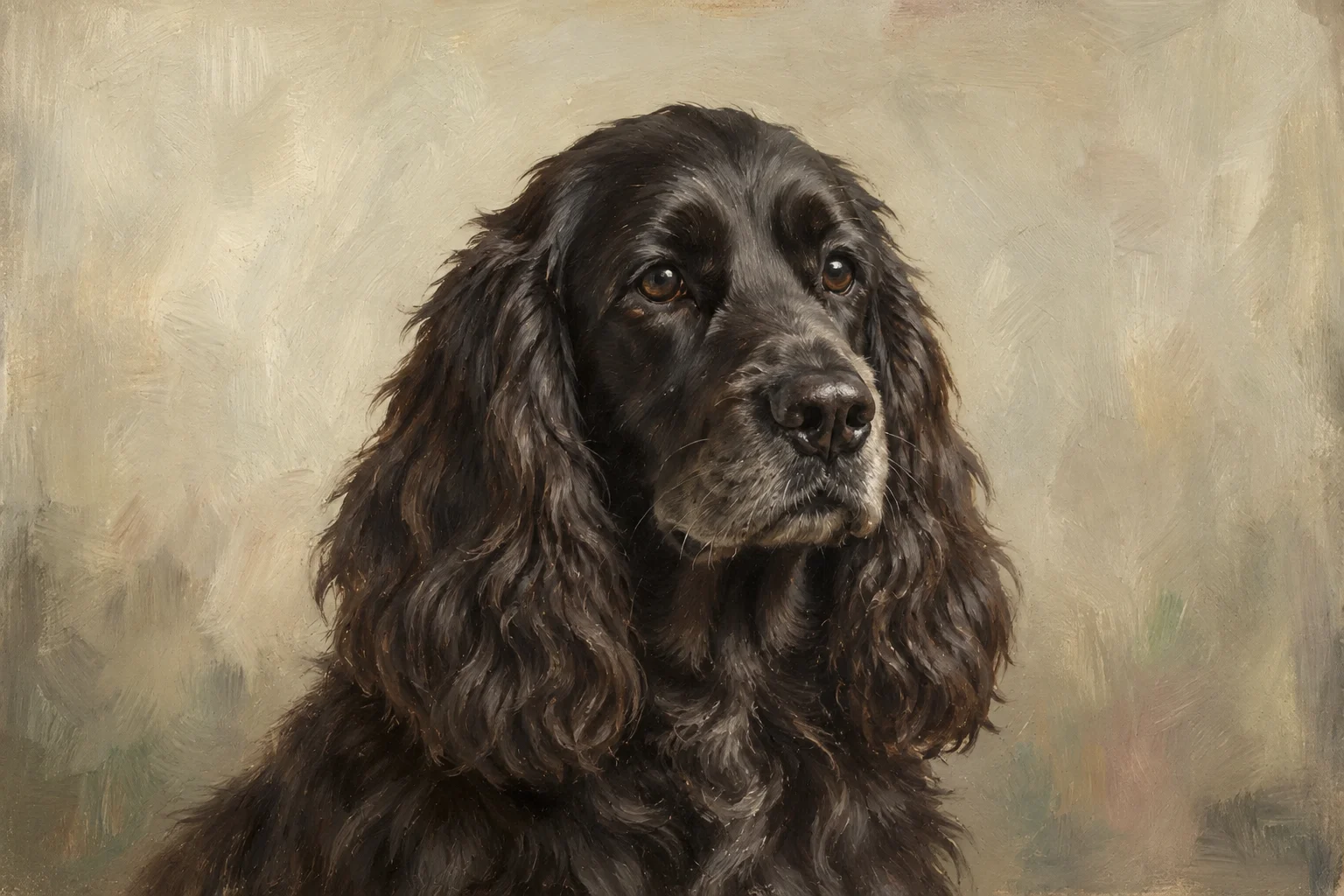
Bred to work close to a person, flushing birds out of the undergrowth, Cocker Spaniels still want to be in the same room as you, and preferably touching. Owners remember the chin resting on their foot, the ears swinging forward with the head tilted to one side, and a dog who knew you were upset before you'd said a word. Golden, black, roan or parti-colour, it's the long silky ears a good portrait catches.
Dachshund
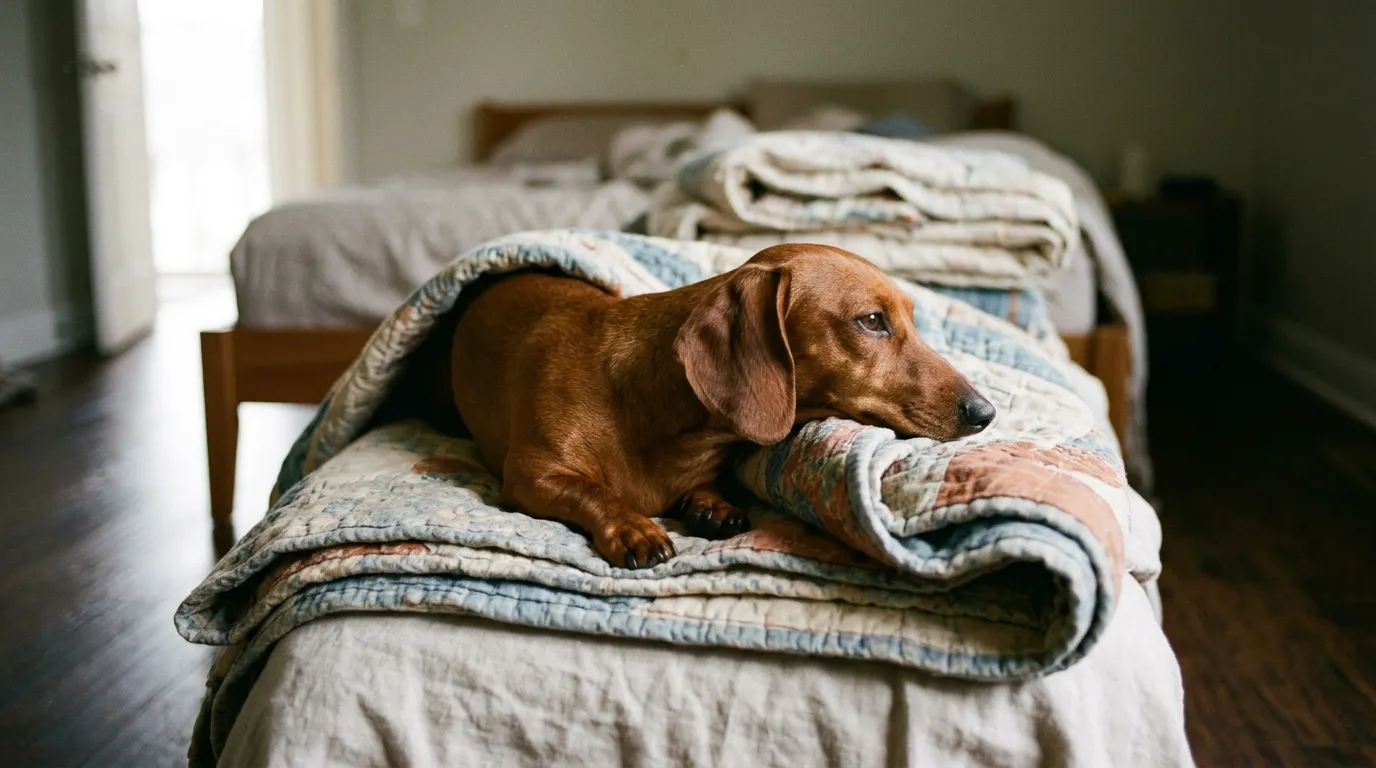
Short legs, a long back, big ears, and the confidence of a dog five times the size. Dachshunds were bred in Germany to go underground after badgers, which explains the stubborn streak. They'd bark at the postman as if they meant to see him off, then tunnel under a blanket and press up against you. Smooth, long-haired or wire-haired, red, black and tan or dapple: a side-on photo that shows the length of them works best.
Dobermann
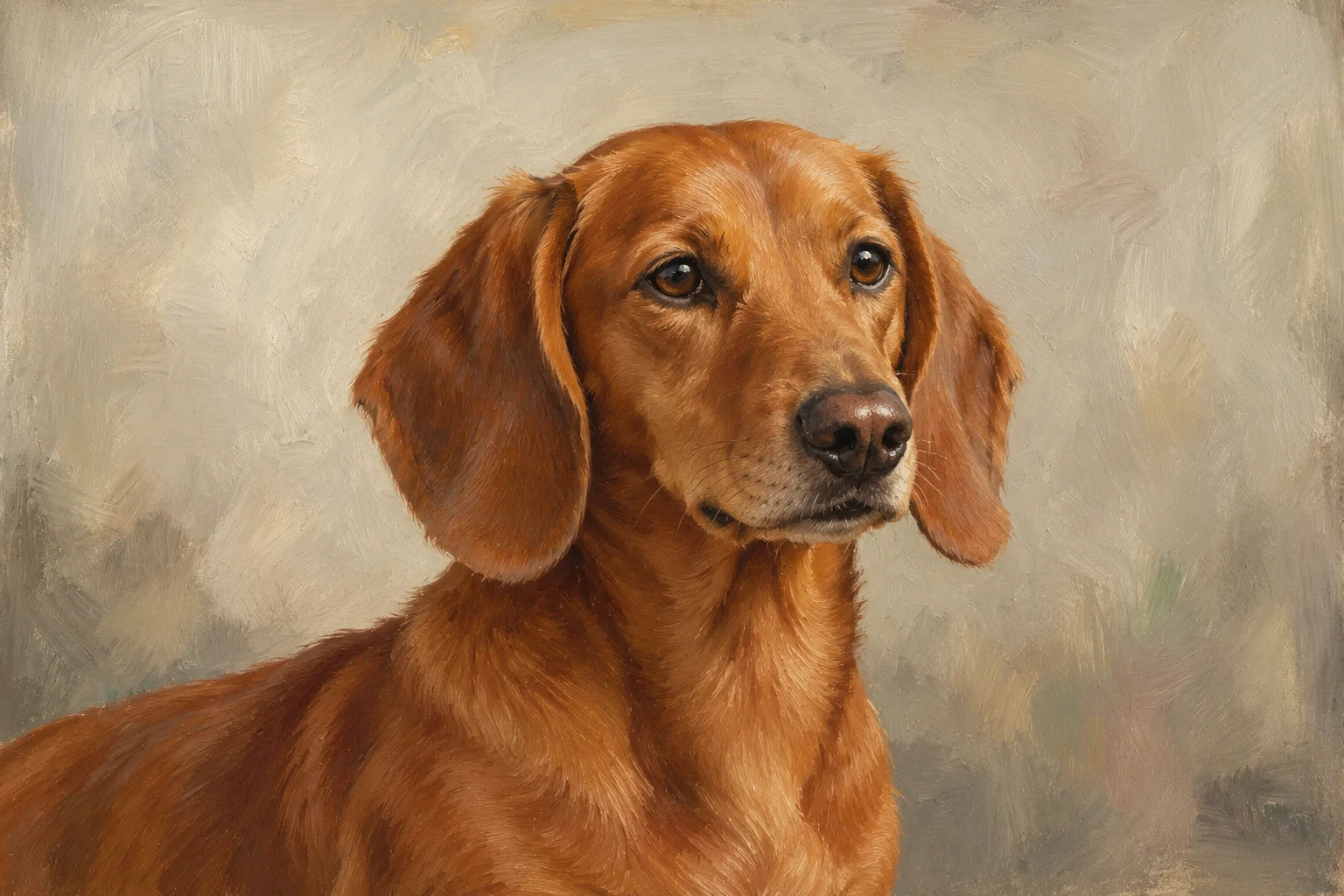
Most people only know the guard-dog image. Dobermann owners know the dog who follows them from room to room and leans their full weight against their legs, which is why owners call them velcro dogs. They feel tension in a room and notice when you're upset. In the UK, ears aren't cropped and tails aren't docked, so British Dobermanns keep their natural ears and long tail, and the portrait shows the dog as they were.
Golden Retriever
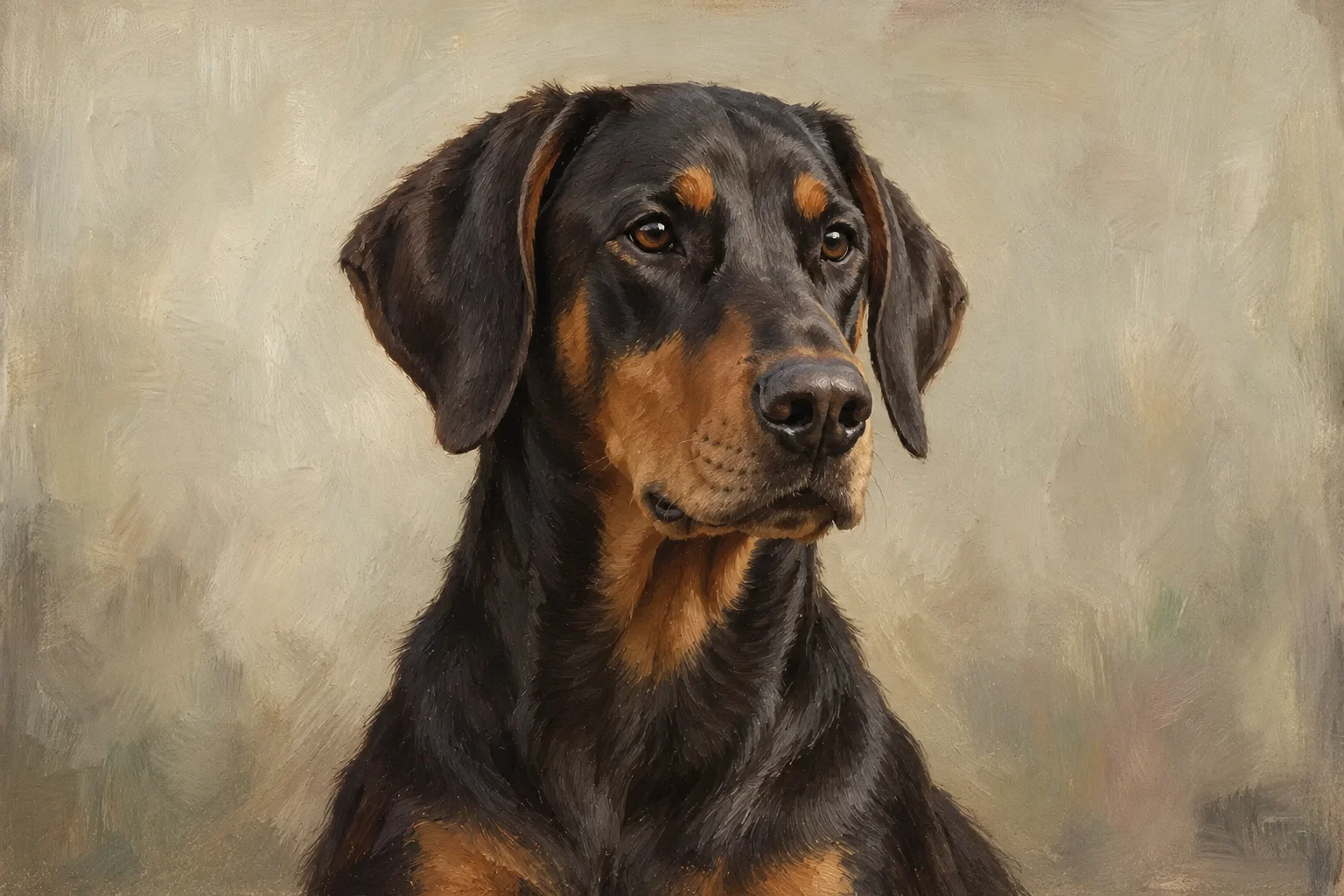
Goldens greet you as if your coming home is the best news of the day, every day. Bred to carry shot game back without marking it, they kept that soft mouth, and plenty of them bring you a toy or a sock when you're sad. In the early years there was a lot of bounce; later it was a steady head on the sofa arm while you watched telly. The portrait can be of the young dog or the grey-muzzled one, whichever photo feels most like them.
Great Dane
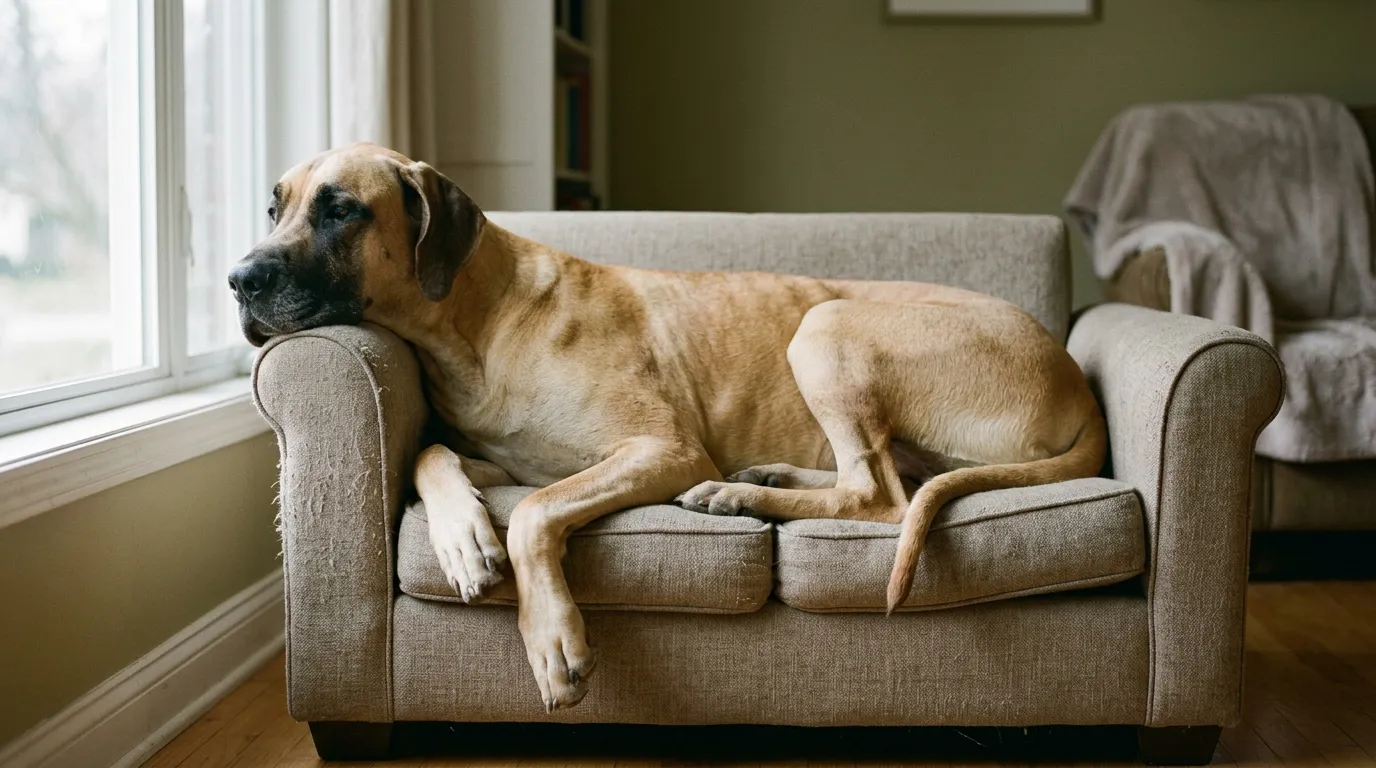
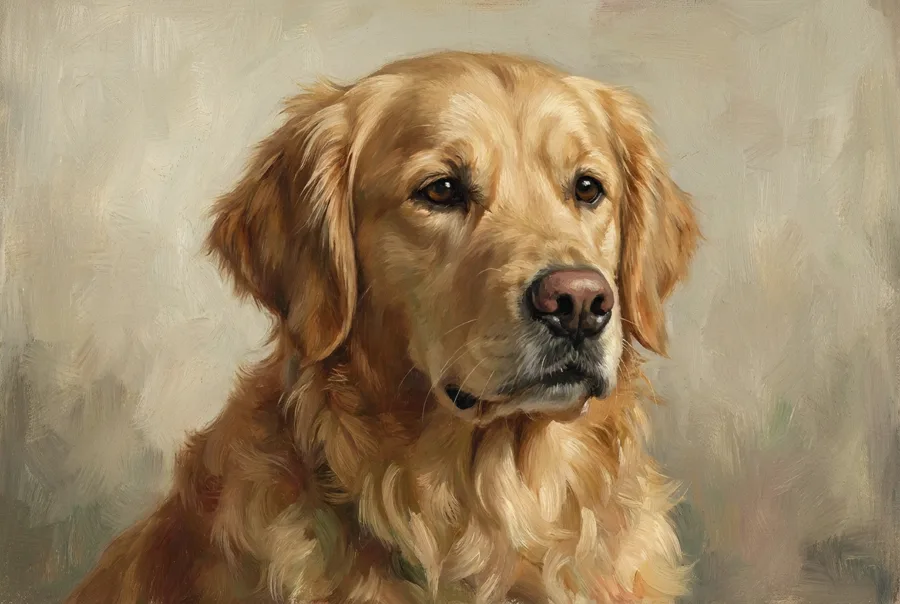
A Great Dane fills a room, head at table height at dinner, but the temperament is mild and patient, and plenty of them think they're lap dogs. The hard part is time. Giant breeds have short lives, most Danes live around seven to ten years, and owners often go in knowing the sums and love them anyway. A photo with something for scale, like the sofa they never fitted on, makes a portrait people smile at.
Greyhound
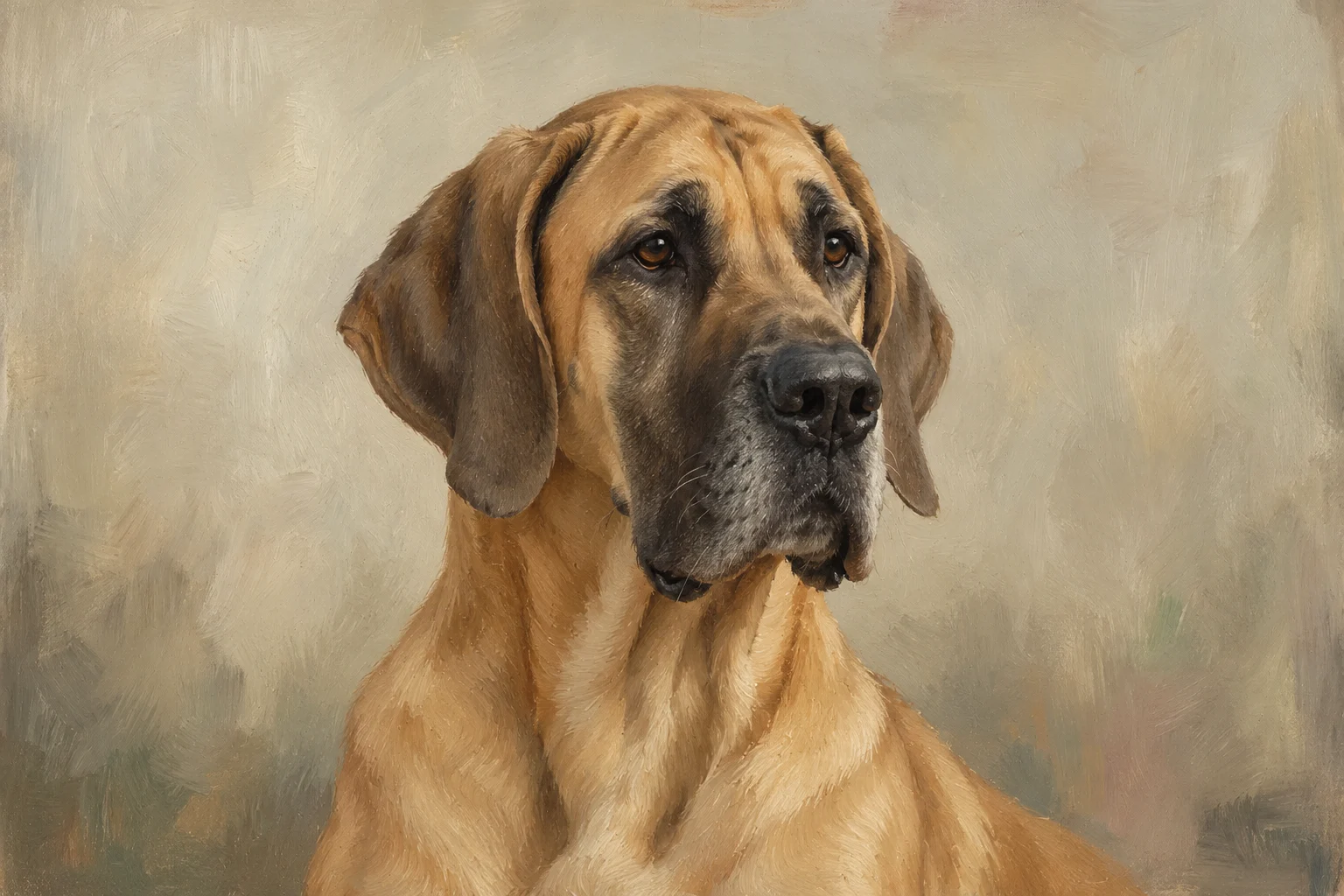
The fastest dog you'll ever own, and the one who sleeps the most. Most British Greyhounds come home as retired racers, with a first life you never saw and a kennel name you may not even know. Watching one find out about sofas, radiators and soft blankets is one of the best parts of having them, and the long nose laid on your knee is what owners miss. A three-quarter view shows the length of the face and the depth of the eye.
Labradoodle
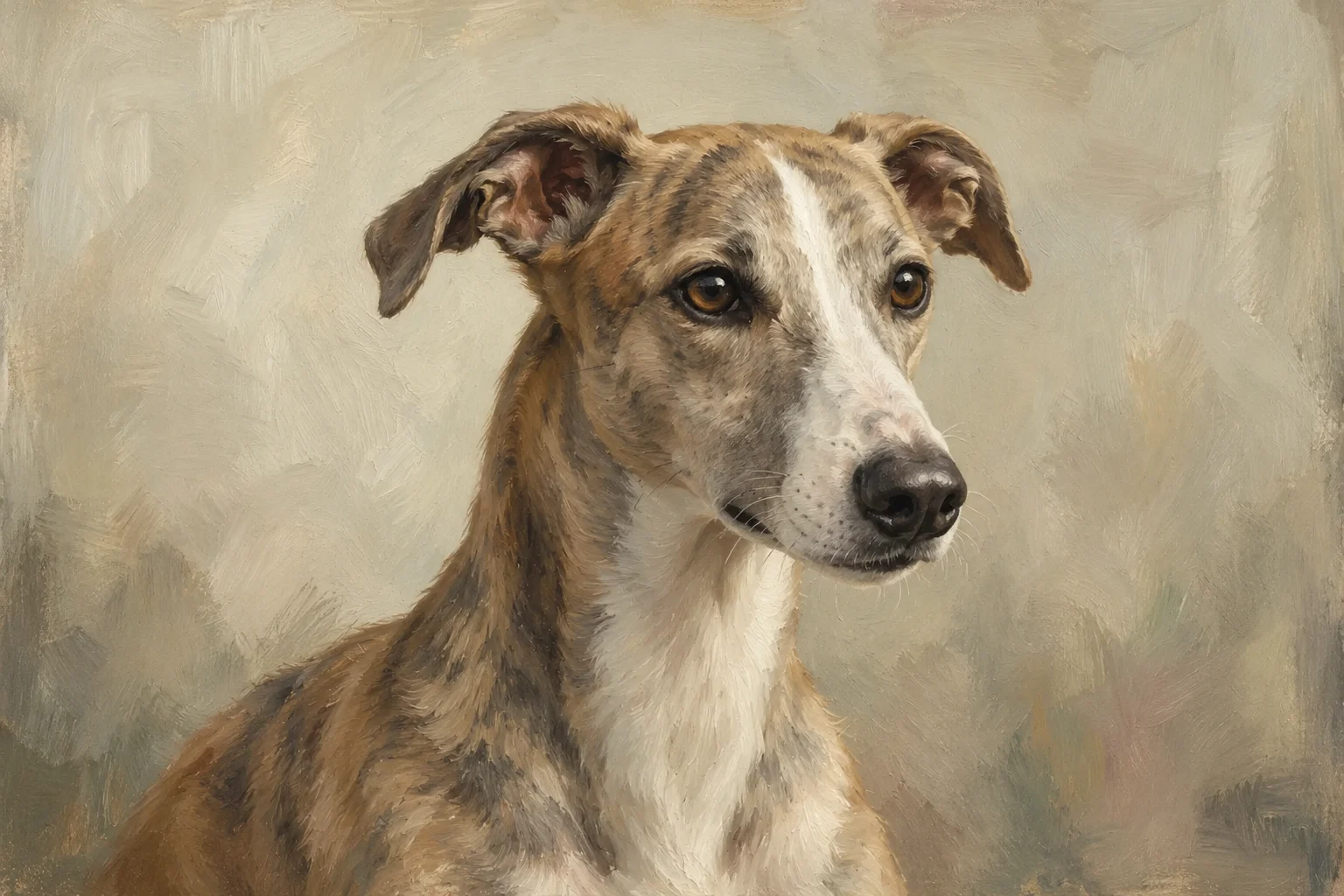
The Labradoodle began in Australia in the late 1980s, bred as a guide dog for a woman whose husband was allergic to dogs. What families got was a clever, noisy, joyful dog who can't bear being left out. The wag starts at the shoulders and takes over everything behind them. Sizes run from miniatures to big standards, and coats from fleece to wool to shaggy, so the portrait follows your photo, not a breed standard.
Lurcher
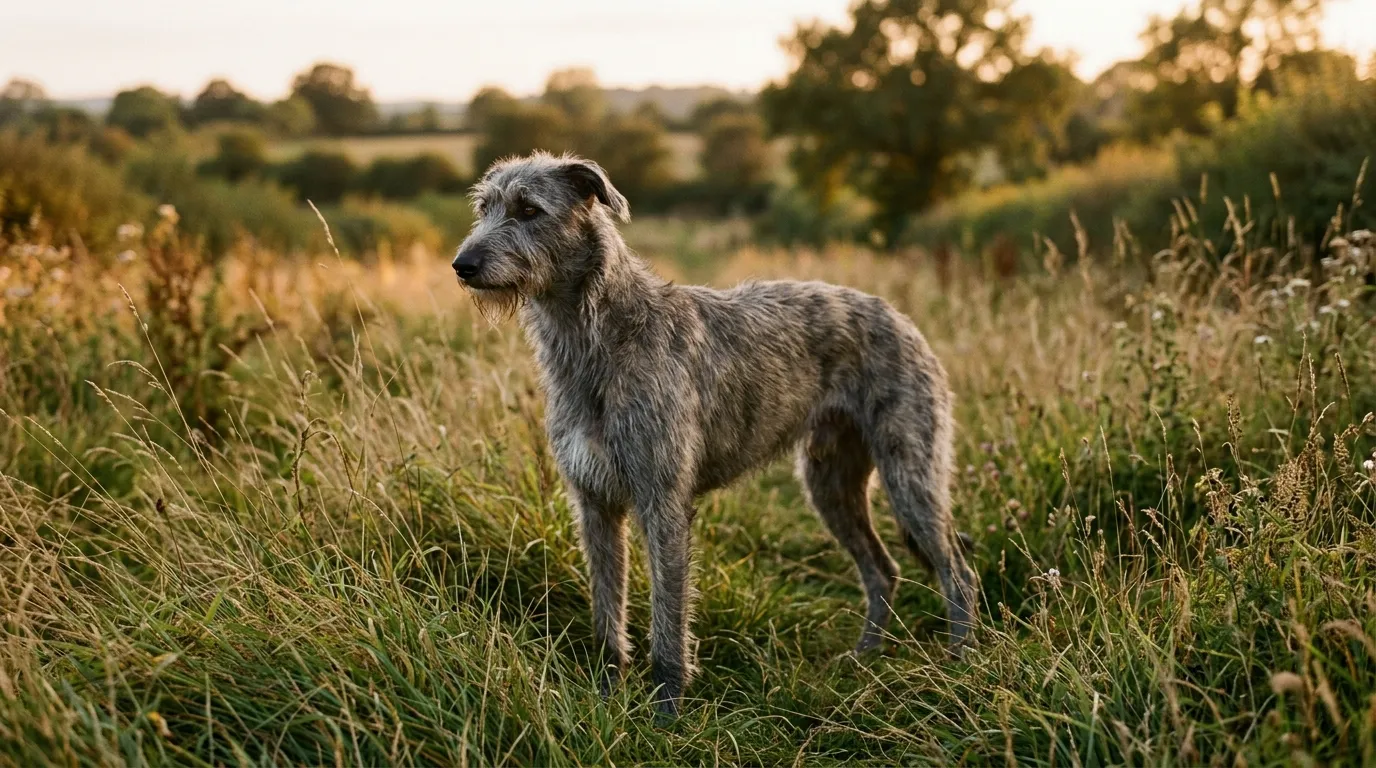
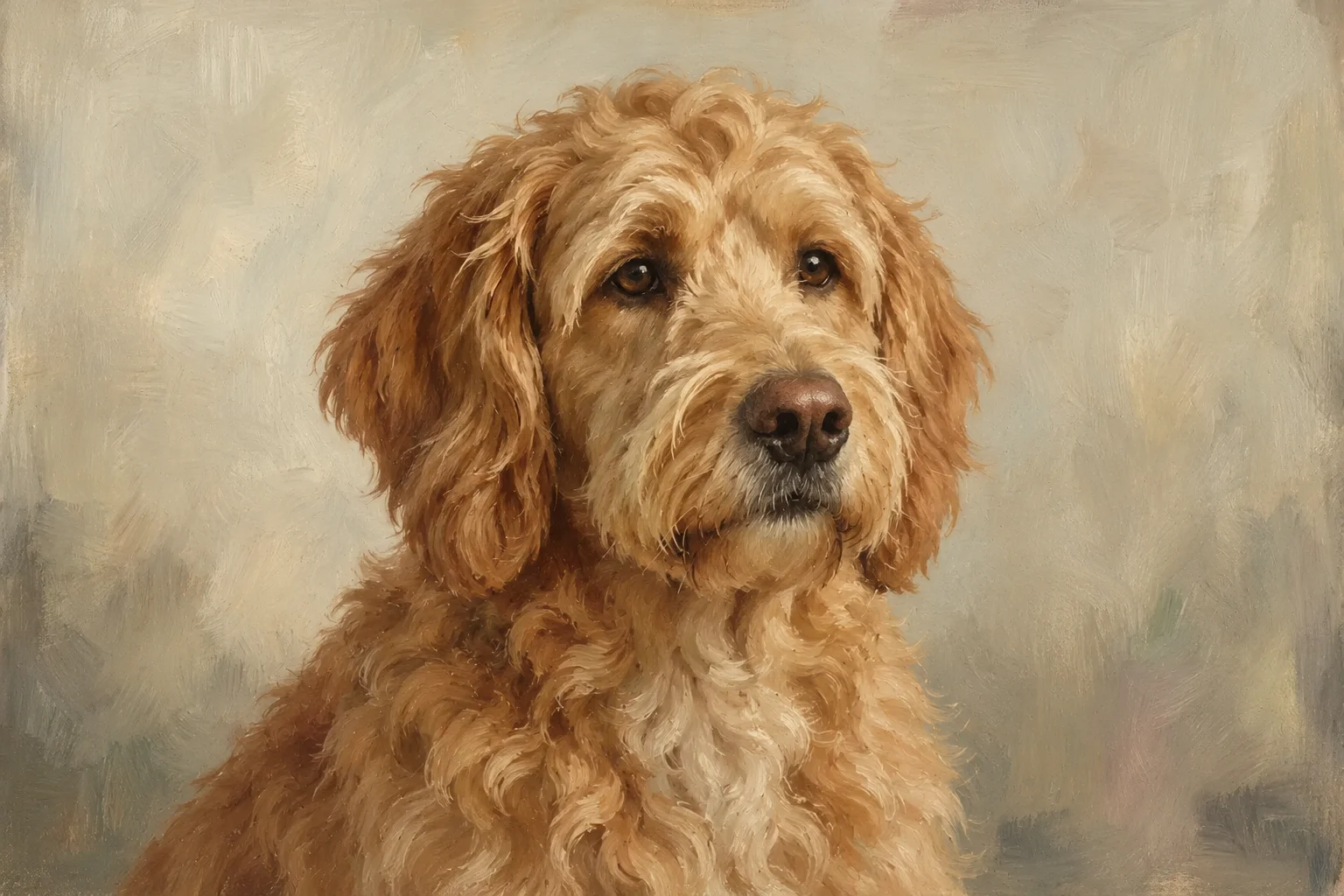
Not a breed but a cross, usually a Greyhound or Whippet with a collie, terrier or Deerhound in the mix, bred for working the British countryside. A lurcher lives at two speeds: flat out across a field, then flat out on the sofa, quite possibly on top of you. Many come from rescue, so owners only know half the story. Smooth, rough or wiry, cream to blue brindle, no two look alike, which is a good reason to have yours painted from a photo.
Rottweiler
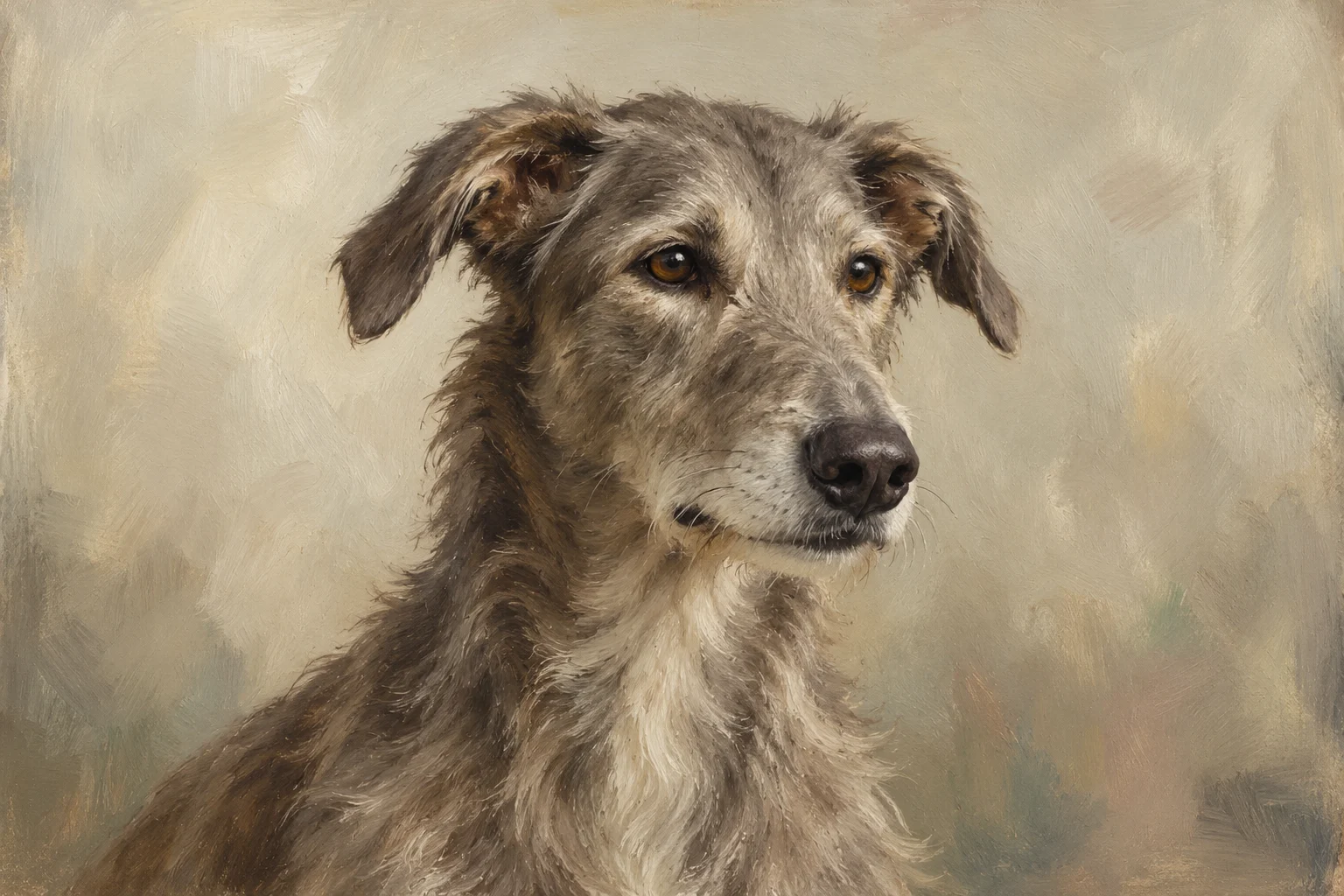
Owners talk about the lean: no warning, just the full weight of the dog against your leg to say hello. Rottweilers look serious to strangers, with the broad head and the black and tan coat, but at home many are sure they're lap dogs and want a cuddle after thunder. There's the greeting noise too, somewhere between a grumble and a purr. Bred for driving cattle and pulling carts, they like having a job, even if the job was following you round the house.
Siberian Husky
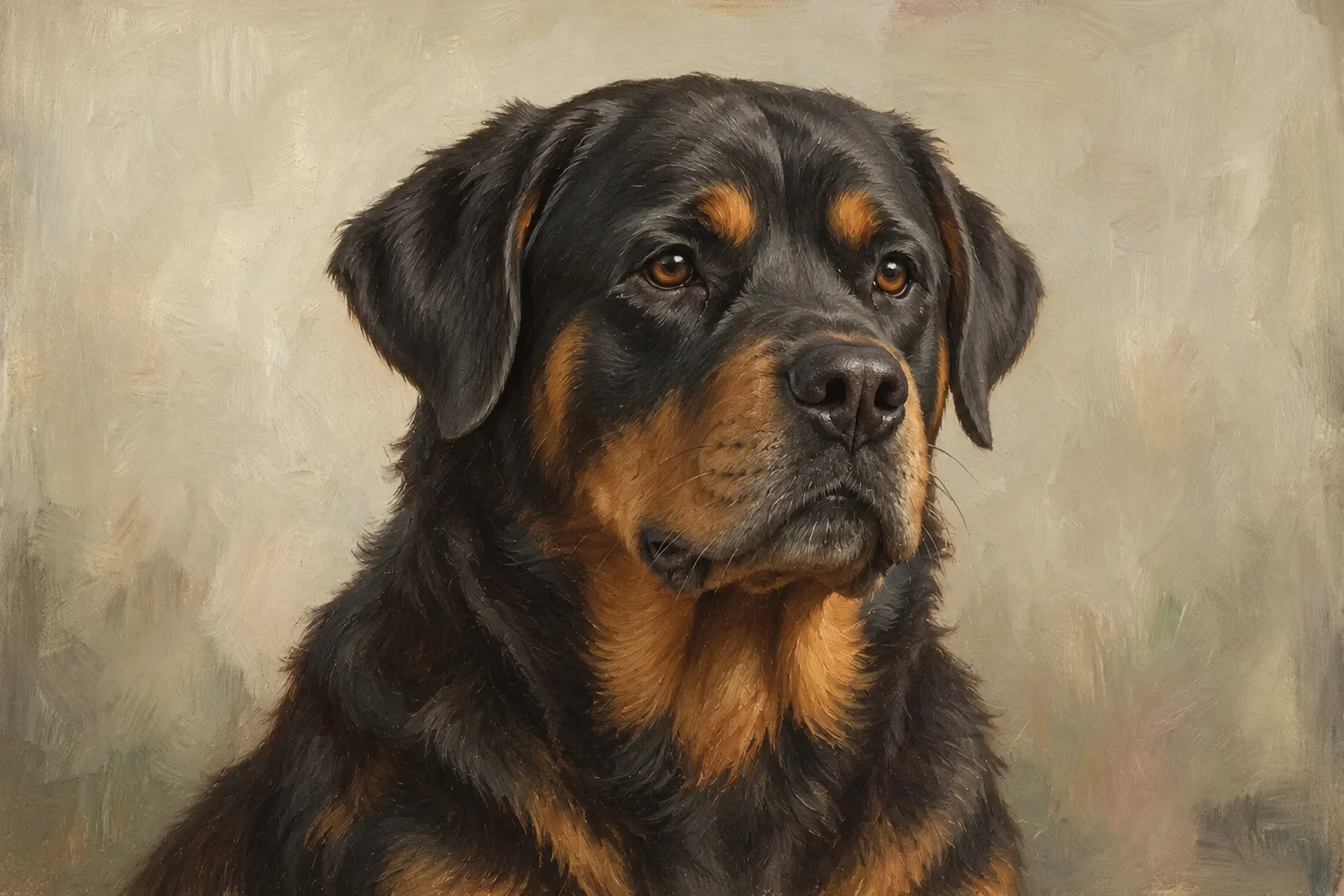
If you had a Husky, you'll remember the noise: the woo-woo when you came home, the running commentary in the car, the back-chat when you asked them to do something. Bred by the Chukchi people of north-east Siberia to pull sleds over long distances, they think for themselves and find every gap in the fence. Then, on a cold night, they choose to lie against you. Blue eyes, brown eyes or one of each, the eyes are what a Husky portrait has to get right.
Springer Spaniel
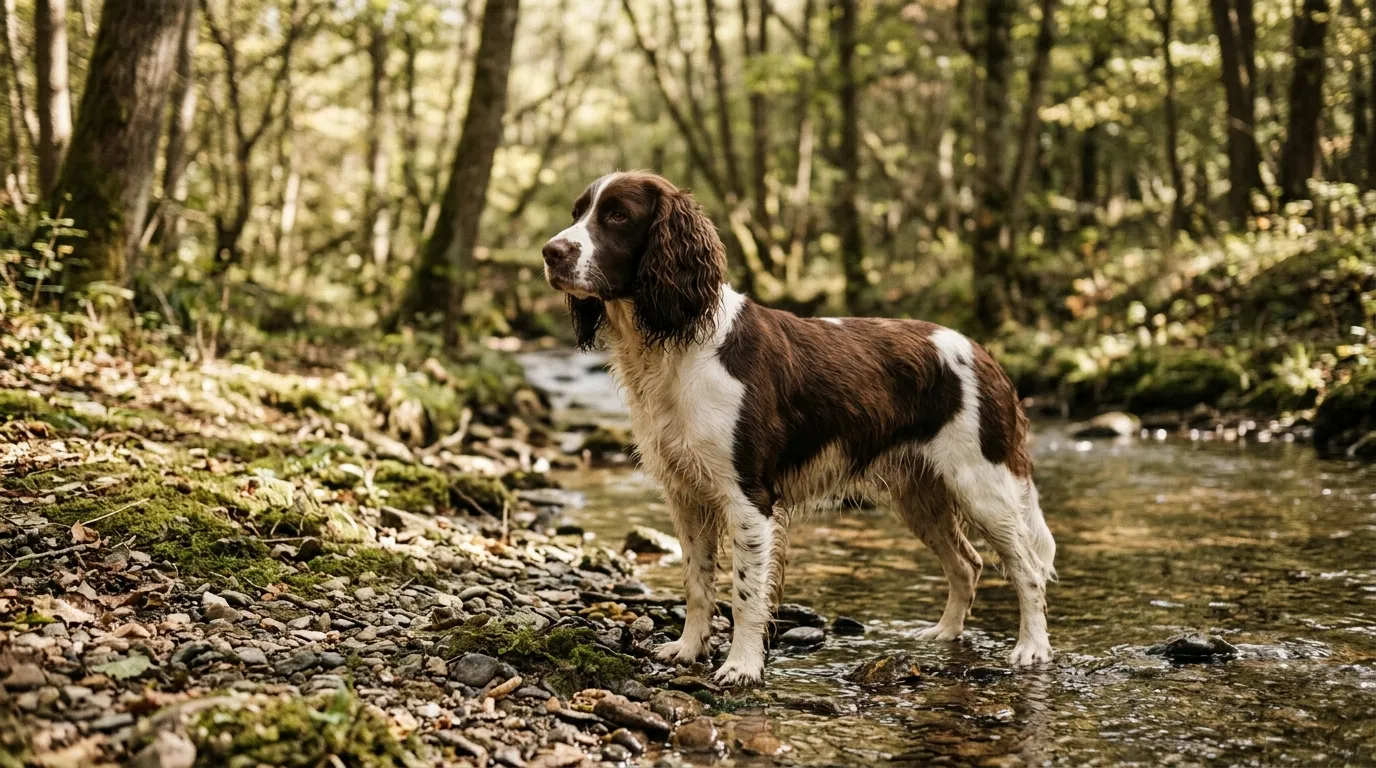
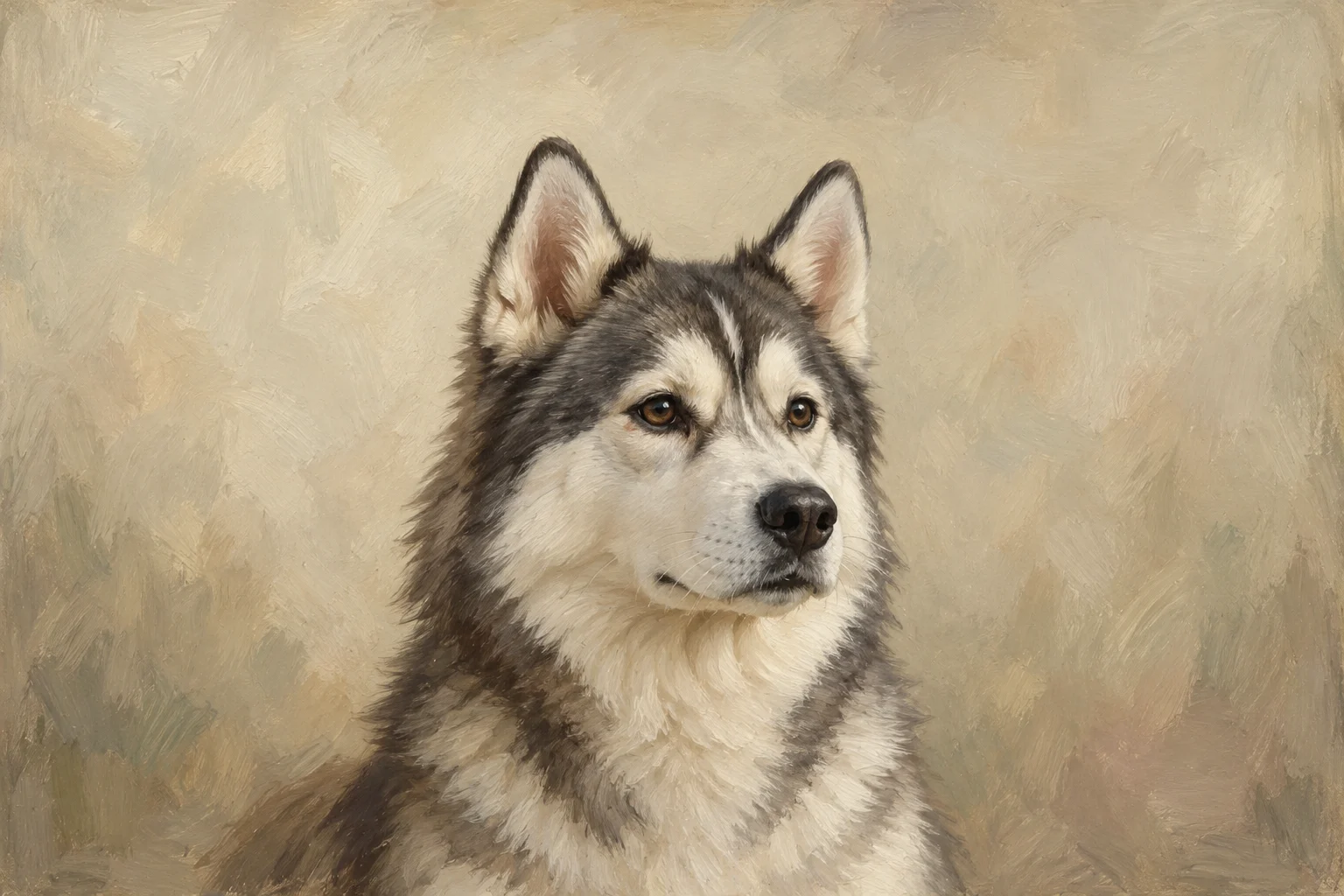
Springers don't stop. They're at the door before your coat is on and in the hedge before you've decided which way to go. Bred as gundogs to flush game and fetch from cold water, they want to be part of whatever you're doing, right now. When one goes, it's the stillness in the house that gets you. Liver and white or black and white, a photo with the ears up and the eyes on you makes a portrait full of life.
West Highland Terrier
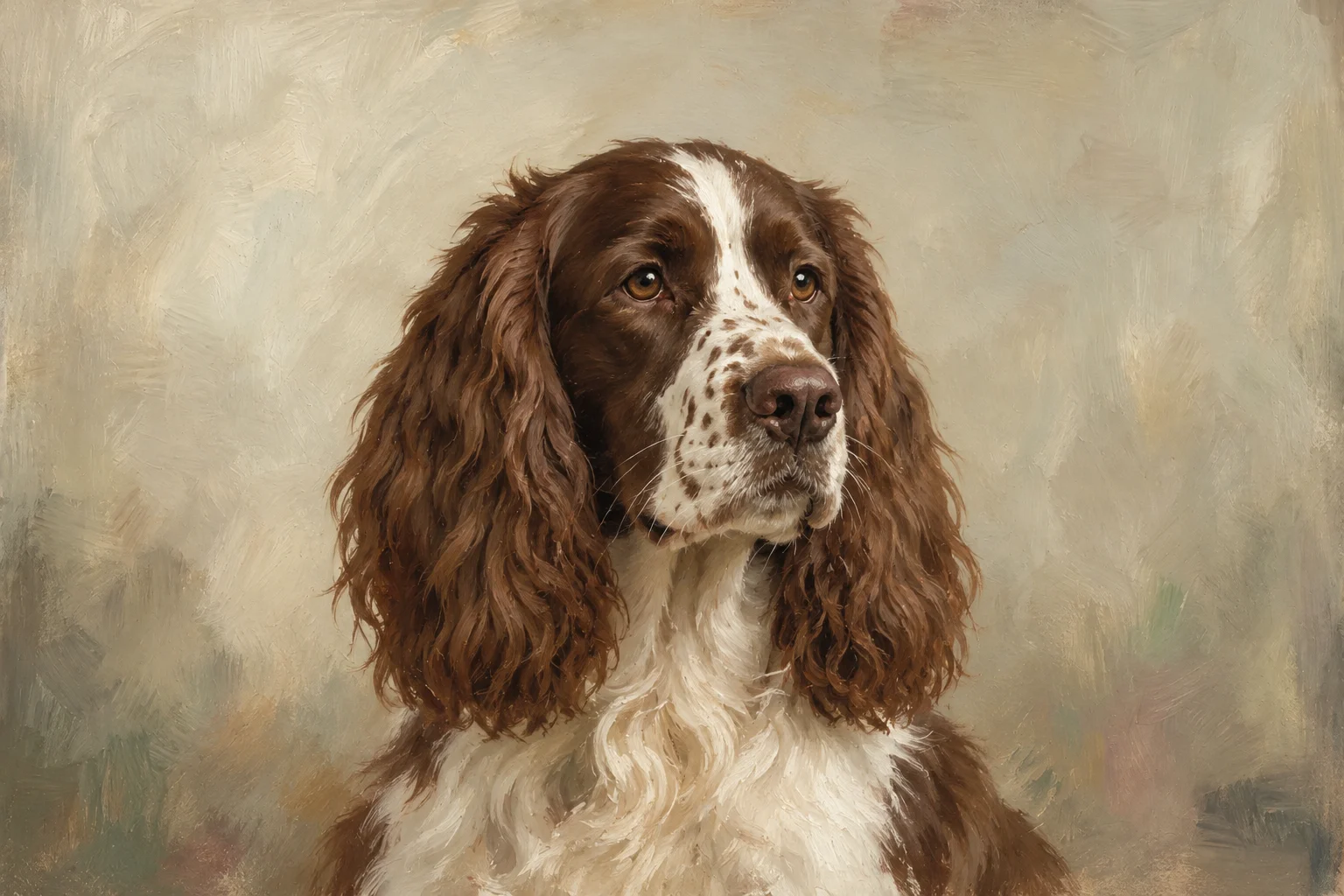
Small body, white coat and a lot of opinions. West Highland White Terriers were bred in the Scottish Highlands to go after rats and foxes among the rocks, and they kept the nerve: nose first into everything, eye contact a beat longer than is polite. White coats can look flat in a picture, so the painted styles add warm cream shadows to give the coat some shape, and the dark eyes and nose stand out against it.
Whippet
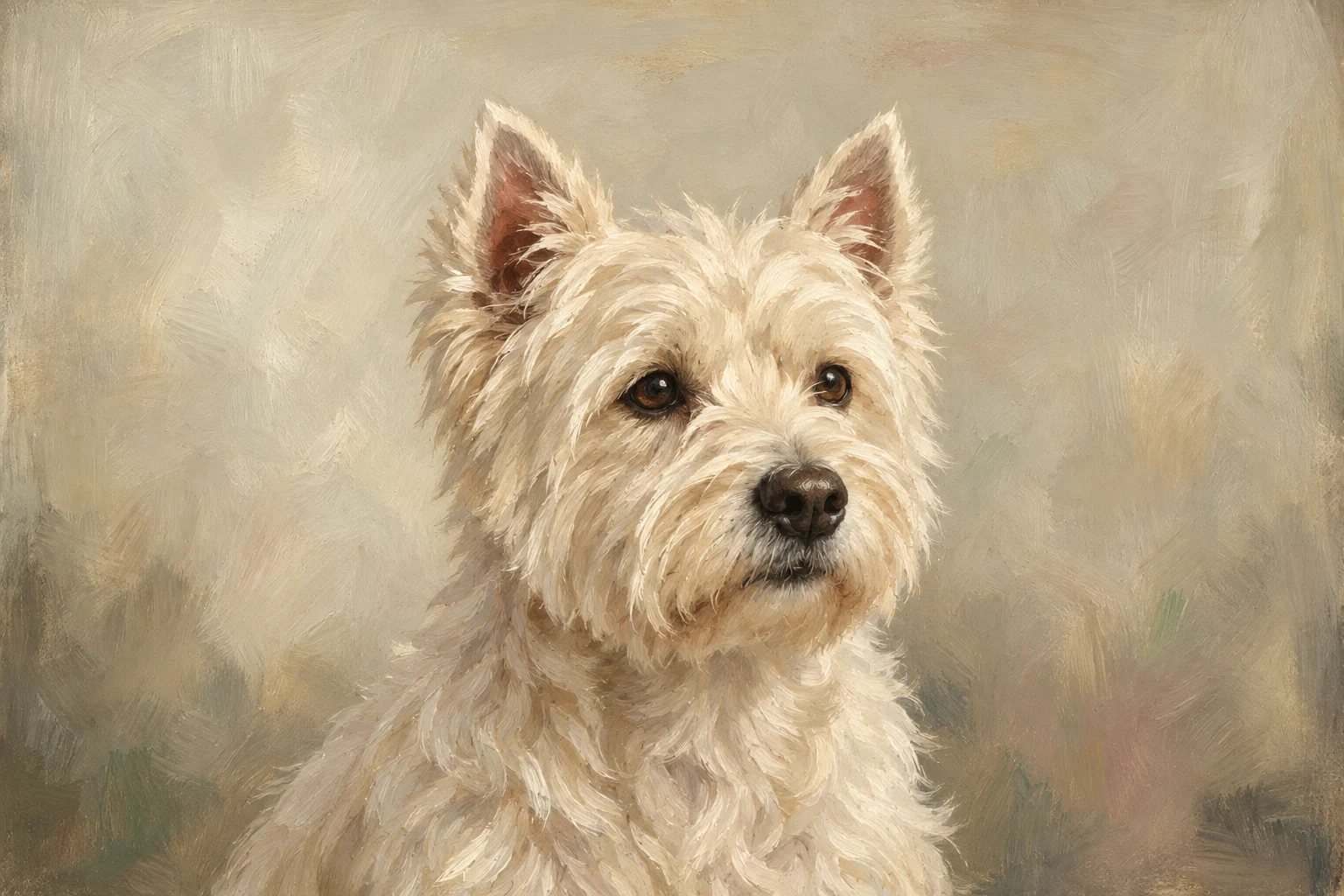
Fast enough to cross the park in seconds, then curled into an impossibly tight loop on the corner of the sofa. Whippets have thin skin and very little fat, which is why they burrow under duvets and steal your warmth. They watch you with a calm, steady look, aware of you without making a fuss. A photo of them curled up, or of the face side-on, both make good portraits.
Where this sits
These breed pages are the bottom of one branch of the site. Above them, the portrait stage covers what we make and how, a portrait of your own animal is the short version, and the cat memorials are the other half of the same list. If the dog died recently and none of this is what you need yet, the grief itself is the first stage and it sells nothing.