A pet eulogy is a short piece of writing, usually 150 to 500 words, that names one life in a specific enough way that anyone reading it would recognise the animal you're describing. It isn't an obituary. It isn't therapy. It's a record: a shape in language for a presence that's been taken out of your house.
Families write them for a few reasons. To read aloud at the vet, or later at home. To send to children or grandchildren who lived with the pet. To go inside a sympathy card. To keep in a drawer and reread on the anniversary. Most pet eulogies are never read by more than two or three people, which is fine. It's not a document for an audience, it's a document for a household.
The structure that works
There's no right way to write one of these, but the eulogies that land tend to share five moves:
- 1. The opening line. Name them. Their age. One phrase that places them in time ("who lived with us for fourteen years"). That's enough.
- 2. One vivid detail. Not a summary of their character, one specific habit, or the chair they always chose, or the noise they made at 6am. Specific beats general every time.
- 3. What they meant to the household. Not "beloved family member." The particular role they played, the one who followed you upstairs at bedtime, the one who sat with the teenager during exams, the one who greeted every visitor the same way.
- 4. What you'll miss. Something small. The weight on your feet. The tag on their collar as they came down the hall. The sound the fridge made when you opened it used to be followed by something. Now it isn't.
- 5. A closing line. Short. No attempt at a moral. A thank-you, a goodbye, or a plain statement of fact works better than anything grand.
The best opening lines for a pet eulogy

The opening is where most people stall. The instinct is to declare the pet special, beloved, treasured, irreplaceable, and that's exactly the move that makes the rest of the piece feel generic. Strong opening lines do something smaller: they name the pet, anchor them in a time, and resist the heartfelt adjective in sentence one. A few patterns that work:
- Name + age + one phrase that places them in time. "Alfie was a golden retriever and he was twelve, and he had lived in this house since he was nine weeks old."
- One specific habit as the entry point. "Juniper picked the same windowsill every afternoon, the left-hand one, where the sun came in latest."
- The household before / after. "We had Alfie for twelve years. Most of those years began with the same rhythmic thump of a tail against the hallway radiator at 6am, ready to begin."
- The fact, plainly. "Our dog Pip died on Tuesday. She was eleven. This is what we want to say about her."
Notice what's missing from those: no rainbow bridge, no "best friend", no "unconditional love". You can build to that language later in the piece if it belongs. The opening line's only job is to make the reader believe you knew the animal you're writing about.
A full pet eulogy example
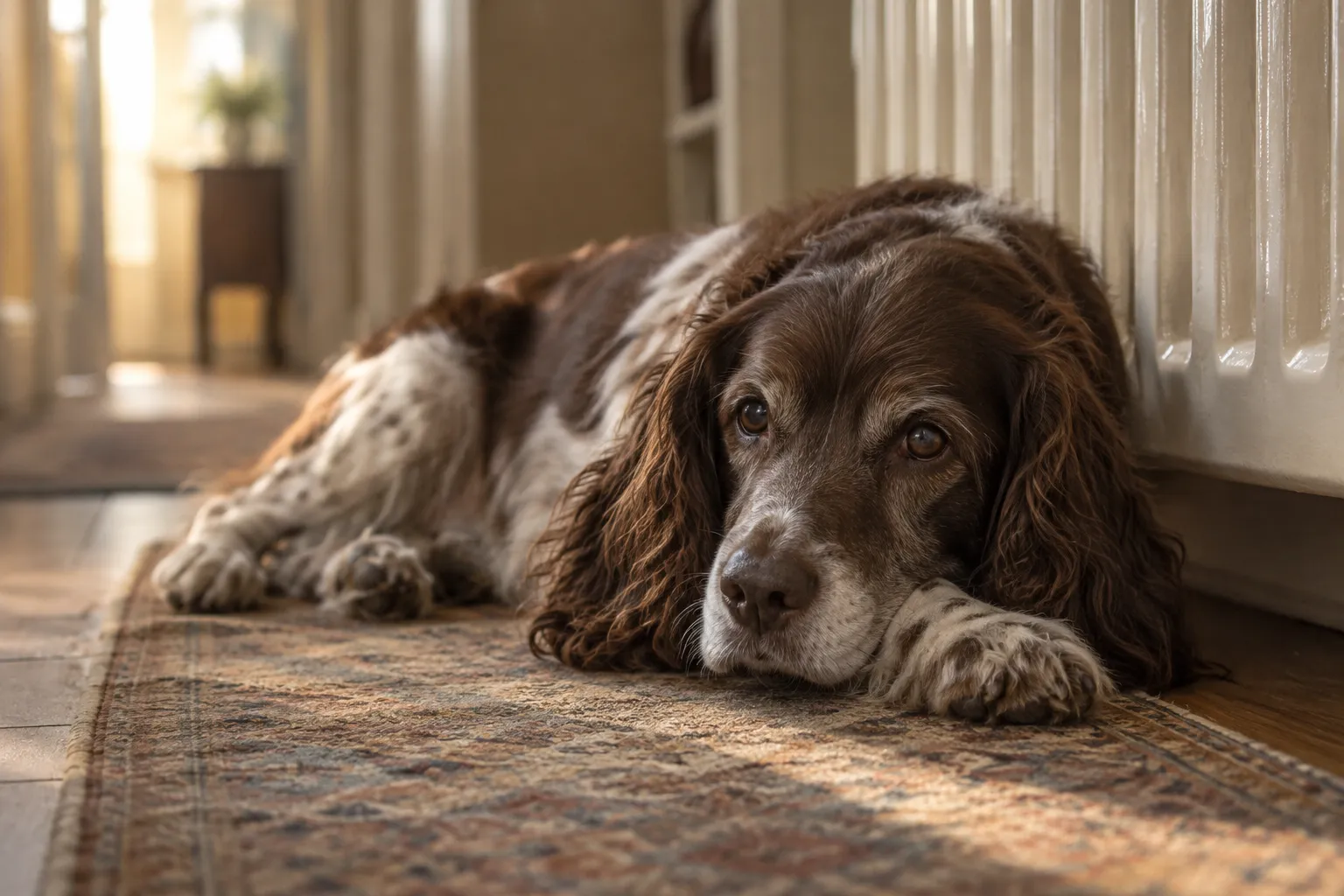
A worked example, written to show the structure, not to record a real animal: Alfie is invented, and everything about him is. The shape is what travels. Substitute your own pet's name, their years, and above all your own details, because the details are the entire point and the ones below are not yours.
Alfie was a golden retriever and he was twelve. He had lived in this house since he was nine weeks old, which is to say he had lived in this house for the entirety of the years our family had been a family. He was, by retriever standards, average in every measurable way, average size, average appetite, average patience for being brushed, and exceptional only in the steady-state thing he was always doing, which was being where you were. He arrived in your room about thirty seconds after you did and lay down without fanfare, and that was, on most days, the entire content of his contribution.
Saying goodbye to Alfie was a gentler business than I'd expected. Alfie's last week wasn't dramatic. He stopped being able to manage the stairs in the autumn, so his bed moved down to the corner of the kitchen by the boiler, which he had always preferred anyway. He still met every visitor at the door, still arrived with whichever soft toy he had decided was today's diplomatic offering, still did the small business of being a retriever, bringing things to people who hadn't asked for them. The vet was kind. The afternoon was unremarkable. He leaned into the side of whoever was closest, which was always one of us, because we made sure of it.
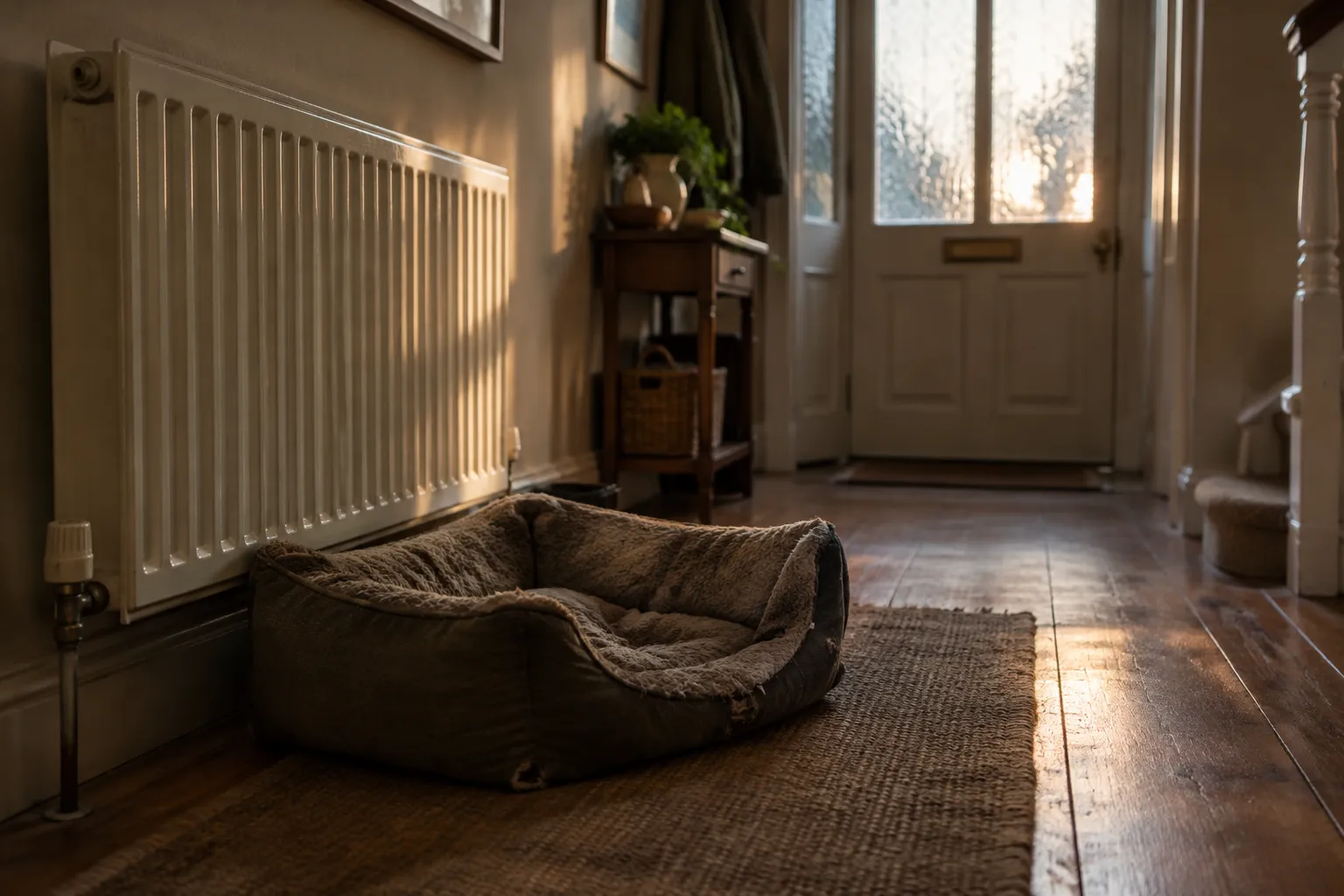
What I'll miss is the sound of his tail thumping the radiator at six in the morning, which had been the household's reveille for the last twelve years. What I'll miss is the way he announced visitors with the same single low woof, regardless of whether the visitor was a stranger, a friend, or one of his own family returning after ten minutes in the garden. What I'll miss is the unconditional love that golden retrievers are credited with as a breed but which Alfie offered as himself, a specific, daily, undramatic furry friend, who chose us. Thank you, Alfie. The house is too quiet now. We'll get used to it. We won't stop being grateful you were ours.
A dog eulogy example, shorter
Around 130 words. Long enough to read aloud without your voice going, short enough to finish.
Monty was fourteen years old and had never met a situation he couldn't sleep through. He came home as a puppy the spring our eldest started school, which means he was there for the whole of her growing up and most of mine. He was spectacularly bad at fetch, he would bring the ball halfway back and lose interest. He was spectacularly good at being nearby, which is what we wanted.
He stopped being able to manage the stairs last winter, so we moved his bed to the living room, and he was happy there, as he was everywhere. He died in the afternoon, which felt right for him. The house is too still now. We'll get used to it. We won't stop being grateful he was ours.
A cat eulogy example
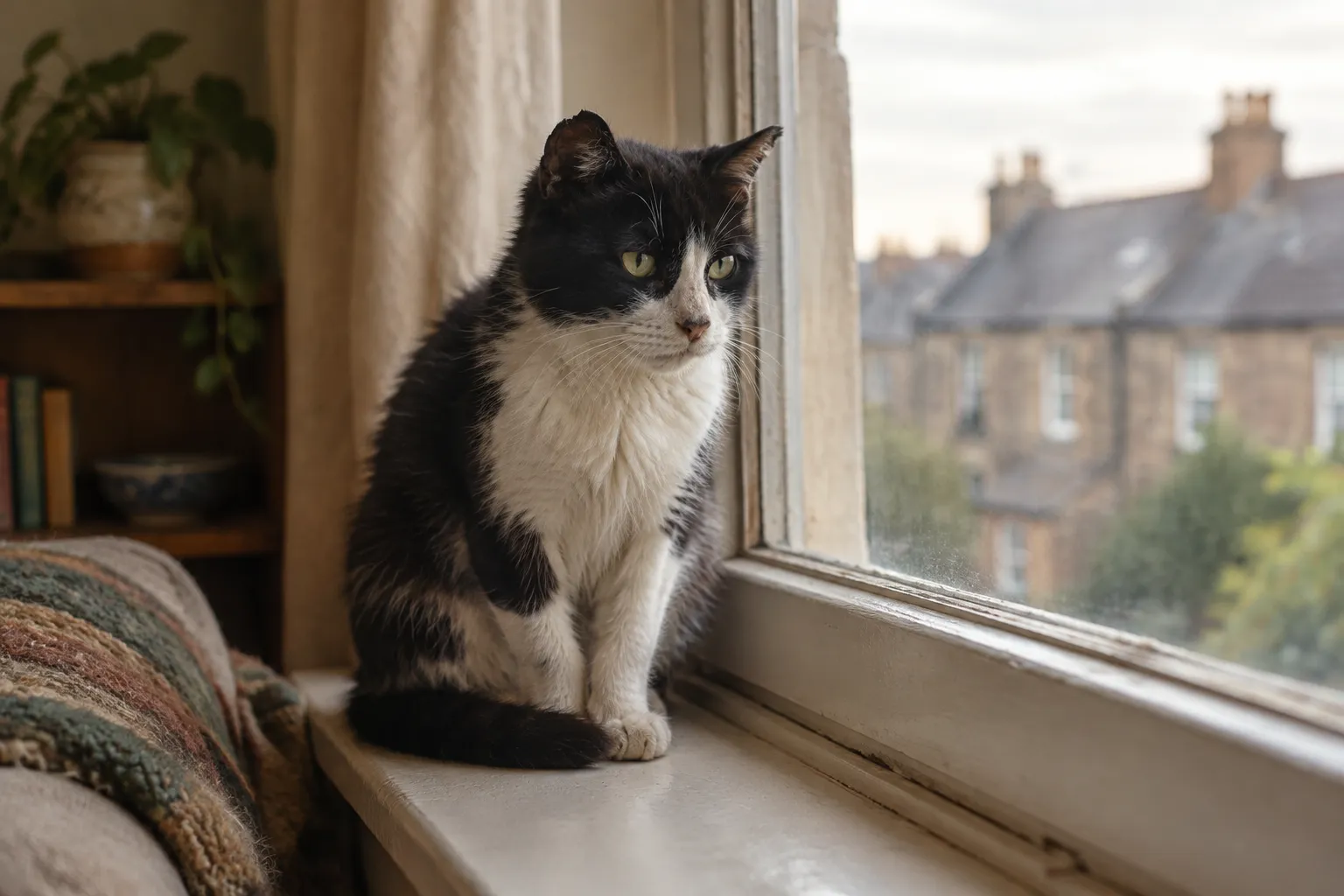
Cats get eulogised badly, usually by being made softer than they were. This one tries not to.
Juniper arrived as a stray the summer of my first flat share. She was about eight. She lived with us for another twelve years. She chose the same windowsill every afternoon, the left-hand side, where the sun came in latest. She didn't like strangers. She tolerated my partner on principle. She required one specific kind of food and would boycott any other brand for exactly as long as it took us to walk back to Sainsbury's.
She purred when she was content, and when she was being moved against her will, and, in her last week, when she couldn't eat. The sunlit patch is empty now. Someone else will claim it eventually. She wasn't a replaceable kind of cat.
A eulogy for a pet who died suddenly
When there was no decline and no decision, the usual structure does not fit: there is no last week to describe. This one leans on the ordinariness of the last normal day instead.
Nell was six, which is no age for a lurcher. On Thursday she did the things she did every Thursday. She took the long way round the field because she always took the long way round the field. She stole a corner of toast off the arm of the sofa and looked at no one while she ate it. On Friday morning she was gone, and there was no warning and nothing anybody could have done, and we have been told that several times now by people who meant it kindly.
What we keep coming back to is that the last day was completely unremarkable. We did not know to pay attention to it. She got the ordinary version of us, the distracted version, the one that let her out and made coffee and did not think about it, and I have decided that this is not a failure. That was her whole life: ordinary days, on repeat, with us in them. She had six years of it and she liked all of them. Nell, we did not get to say goodbye. This is us saying it late.
A eulogy a child can read aloud
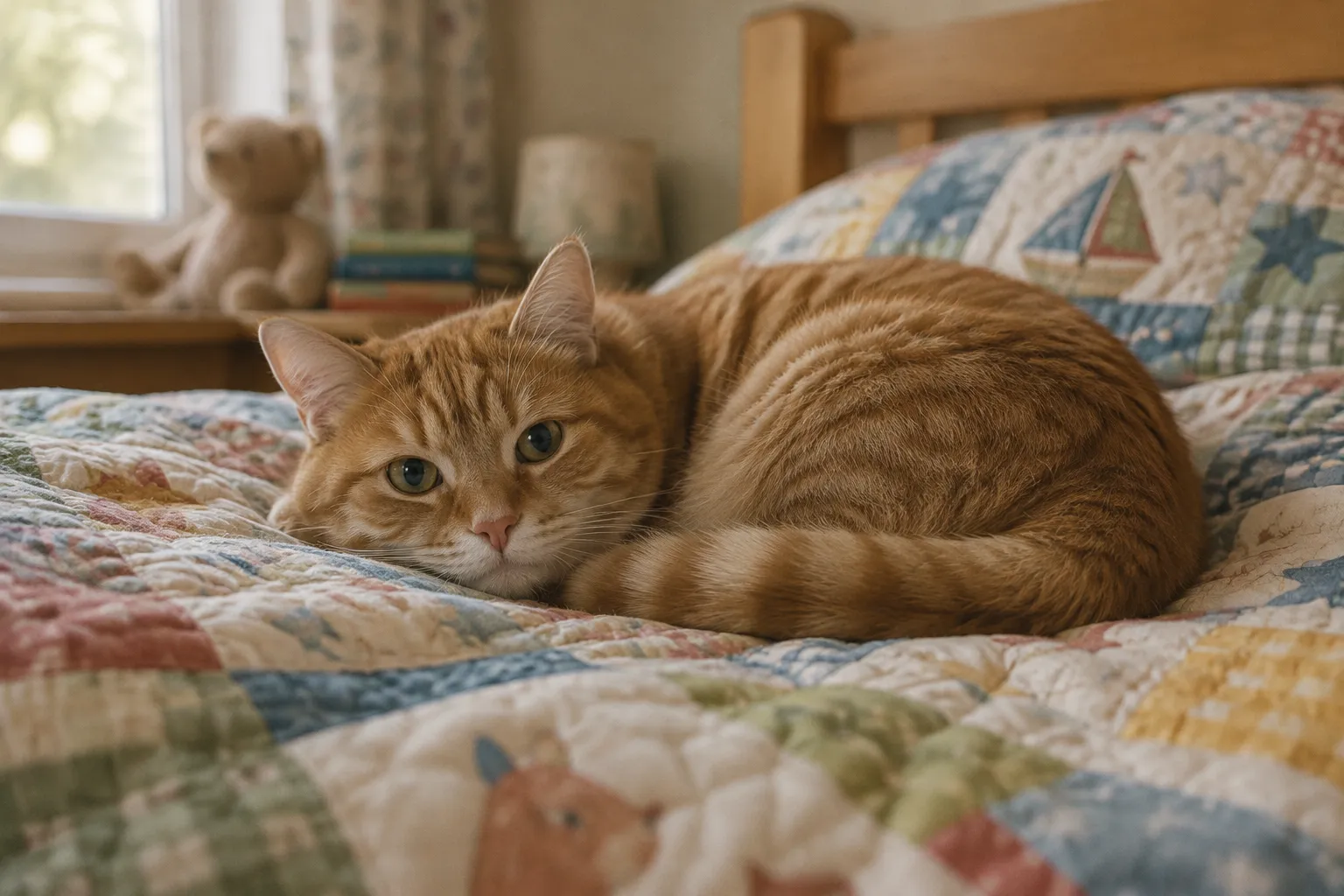
Short sentences, no abstractions, nothing a nine-year-old would stumble over in front of the family. If a child wants to write their own, this is roughly the length to aim for.
Marmalade was my cat. She was ginger and she had one bent ear. She slept on my bed every night, on the left side, near the wall. She did not like being picked up but she liked sitting next to you, which is different.
She was fifteen. That is old for a cat. She died on Sunday at the vet and Mum was holding her and I said goodbye first. I am sad but I am glad she was mine. Thank you Marmalade. I will leave the left side of the bed empty for a bit.
What to avoid
- Writing in their voice. "I was only a little dog" pieces feel hollow. You knew them, they didn't know themselves.
- Rainbow-bridge language, unless it's what you believe. Borrowed metaphors tend to read as borrowed.
- Summaries of their whole life. One specific memory lands harder than a timeline.
- Apologising for grief. "It might seem silly to some people but", skip it. Cut the hedges.
- Writing it for an audience. You're writing it for one house. Write for the person who lived with them.
When to write it
Usually not on the day. The first week isn't a structured-writing week. Two weeks later, or a month, usually gives you something you can finish. If you're stuck, leave it longer. A eulogy written six months after works as well as one written six days after, and is often better, because the detail has had time to settle.
If writing it yourself isn't right
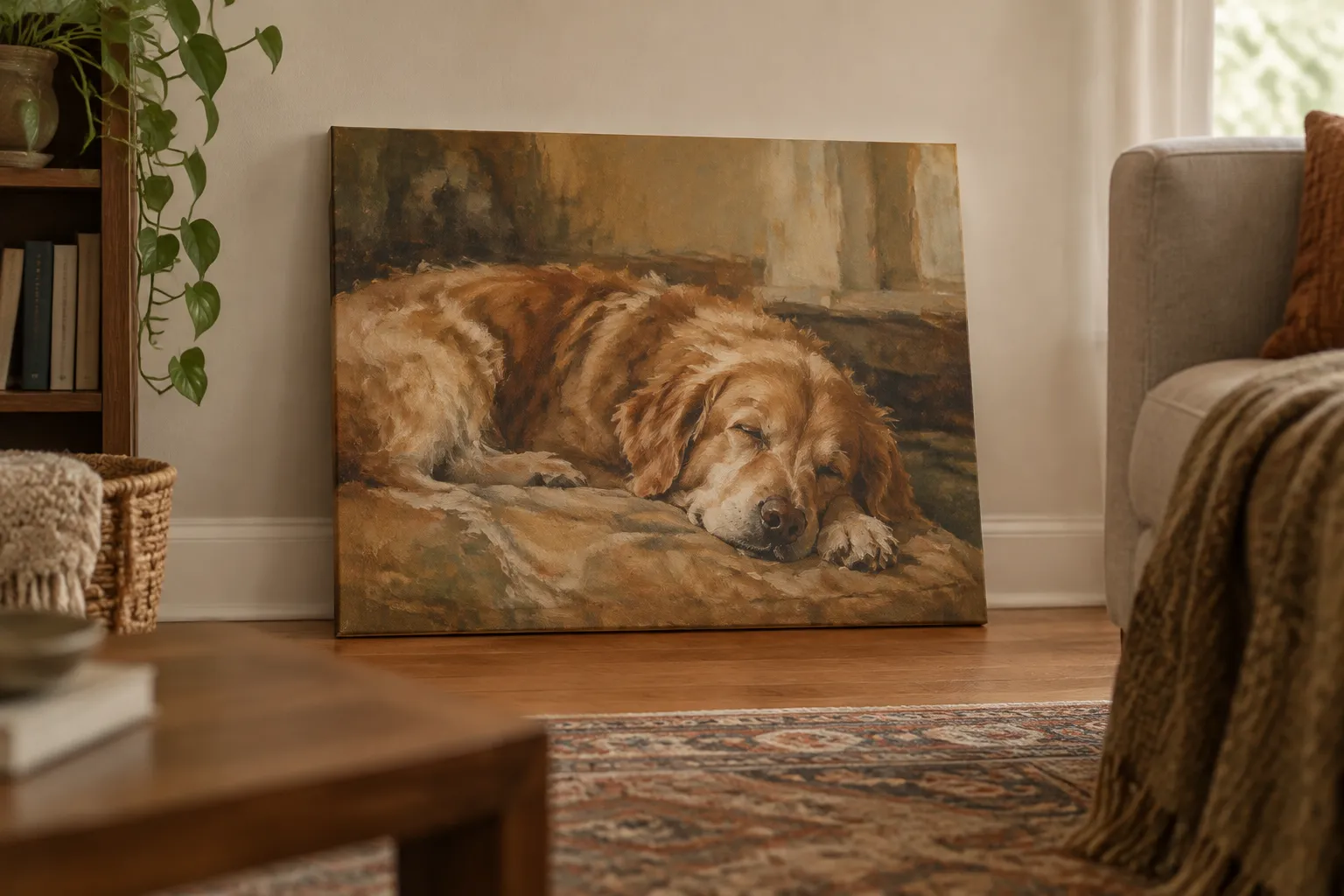
If writing it yourself isn't right, a Small Goodbyes portrait is made from your own photo in an oil, watercolour, charcoal, line or pastel style, printed to order: a different way of keeping them close when the words won't come. There are also specific pages for a dog memorial and a cat memorial if it's a portrait you're picturing.
Related reading: The stages of pet loss grief, on why the five-stages model is a useful vocabulary and a misleading map, and what helps in the first months. If you want a line to open or close with, our checked collection of pet loss quotes keeps only the ones that are properly attributed.
If you or someone you know is struggling after a pet loss, the Blue Cross Pet Bereavement Support Service offers a free helpline (0800 096 6606, 8.30am–8.30pm) staffed by people who take this kind of grief seriously. The Ralph Site, a UK non-profit for pet bereavement, is also worth a look if you want a wider network of support in the weeks after a loss.