The first Christmas after losing a dog or cat is hard in a way that ordinary bad days are not. The house is full of people and traditions, and one of the family isn't there to be part of them. You don't have to feel festive, and you don't have to hide that you don't. This guide is about what tends to help, written plainly by people who make pet memorials for a living.
Why the first Christmas without your dog is so hard

Christmas is built around togetherness, and a pet is part of that. The stocking with their name on it, the paper they ripped open, the walk on Christmas morning, the lap on the sofa afterwards. Every one of those moments now has a space in it, and the day is loud enough that you notice all of them at once.
The Scottish Pet Bereavement Counselling Service puts it directly: "While the festive period is often hailed as 'The Most Wonderful Time of the Year', this is seldom the case for those who are grieving" (Missing your pet at Christmas, published 7 December 2021, read 30 September 2026). It also says "there is no time limit on grief". The PDSA agrees that "there's no fixed timeline" and that "it's completely normal to grieve a pet just as deeply as you would a person" (PDSA vet Q&A, read 30 September 2026). The RSPCA's page quotes the pet bereavement therapist Andy Hawkins: "Grief is more like a tide than a timeline" (RSPCA on coping with pet loss, read 30 September 2026). If you find yourself fine at breakfast and undone by the afternoon, that is the tide, not you failing at Christmas. The general picture is in our guide to pet grief, and the shapes it takes are in the stages of pet loss.
Small things that can help on the day

None of these fix anything. They give the missing feeling somewhere to go, which is usually what helps. Pick one, or none. The first four come from the Scottish service's list; the last is our own suggestion.
- Light a candle for them. The Scottish service suggests lighting one and "taking a moment to reflect". It takes a minute and can be done alone, before anyone else is up.
- Write them a letter. The same page suggests telling your pet how you feel at this time. It can be one line, and no one has to read it.
- Give in their name. The Scottish service also suggests a donation to an animal or conservation charity in your pet's name. If there is a rescue you were grateful to, that is a good place for it.
- Keep the walk. If Christmas morning always included a walk, go anyway, with a coat and a flask. The route is still yours, and it can be easier than staying in.
- Say their name out loud. Tell whoever is at the table that you are missing them, so no one has to guess whether they can bring it up.
If you want something that lasts past the day, our pet memorial ideas include plenty of things we do not make.
The Scottish page also mentions hanging a personalised bauble on the tree. We make one: a round ceramic bauble with their portrait, or your photo as it is, printed on it. You can make it from a photo and see the portrait before anything is printed.
What to do about the stocking, the bowl and the presents
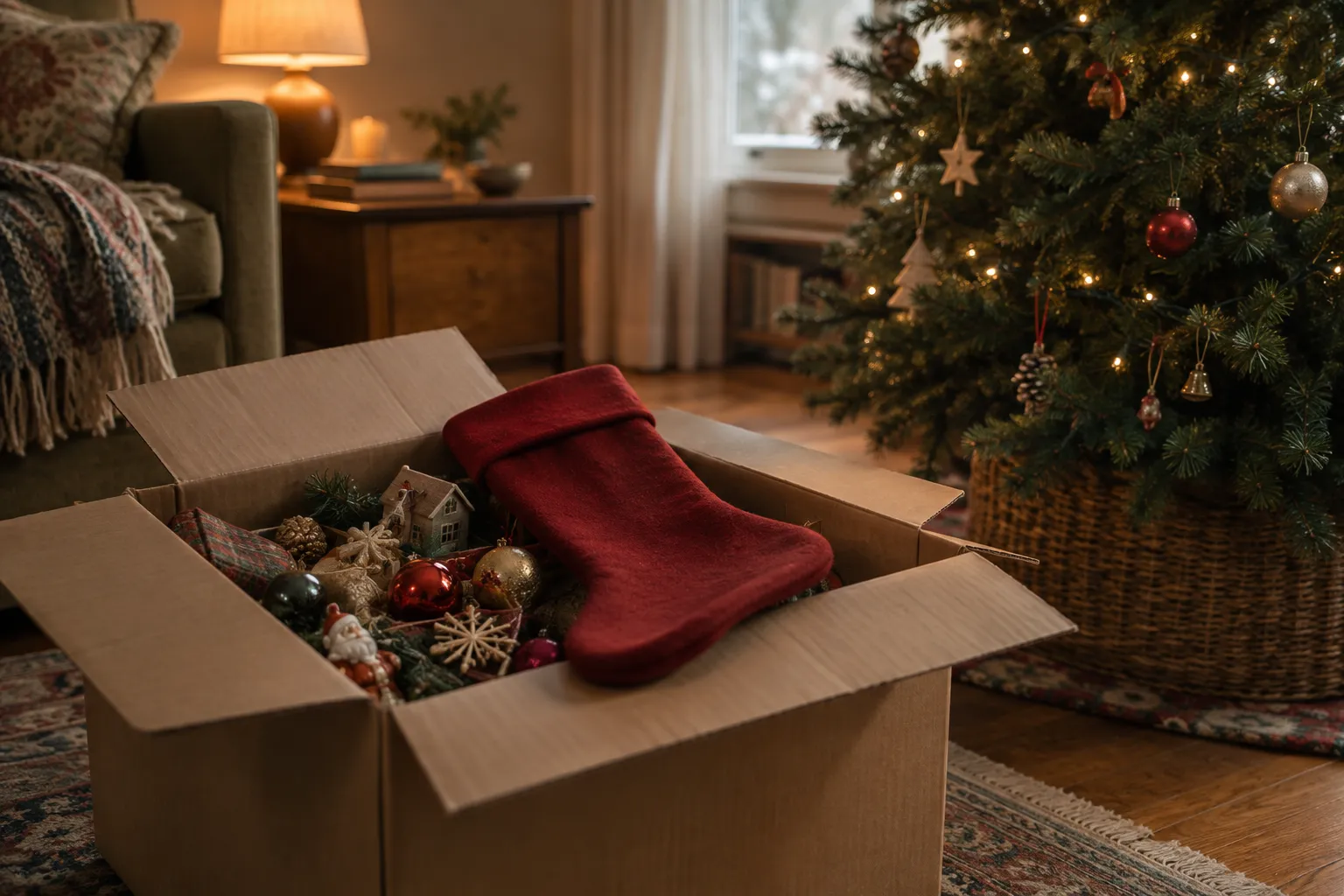
There is no right answer, only the one you can manage. Some people put the stocking up because leaving it in the box feels worse. Some put it away this year and bring it back next. Some fill it with something for the household, or for a rescue. If there are other people in the house, a short conversation beforehand ("we'll hang it, we'll put it away, which do you want?") saves an awkward moment on the day. If there are children, our guide to explaining a pet's death to a child has wording for different ages.
For someone facing their first Christmas without a pet
If you know someone who lost a dog or cat this year, this is the Christmas they will notice who remembered. Say something, however worried you are about getting it wrong; what to say when someone loses a pet has plain wording, and a card is often enough on its own (what to write in a pet sympathy card). Use the animal's name. Ask how they are, and then let them answer.
If you want to give something as well, keep it to the animal itself, not a general "sorry for your loss" object. If a gift feels too much, a card and a phone call is a complete answer.
When it is more than a hard day

If you can't sleep or eat, or you find the days after Christmas getting darker, not lighter, talk to someone. The Blue Cross Pet Bereavement Support Service says its services provide "genuine support from 8.30am to 8.30pm, every day", on 0800 096 6606; the page doesn't say whether the line is open on Christmas Day, so check before you rely on it (Blue Cross pet loss support, read 30 September 2026). We have gathered the other UK options, including who to ring and what to expect, on our pet loss support page. If you are thinking of harming yourself, call the Samaritans on 116 123, free from any phone at any time (read 30 September 2026), or 999 if you are in immediate danger.