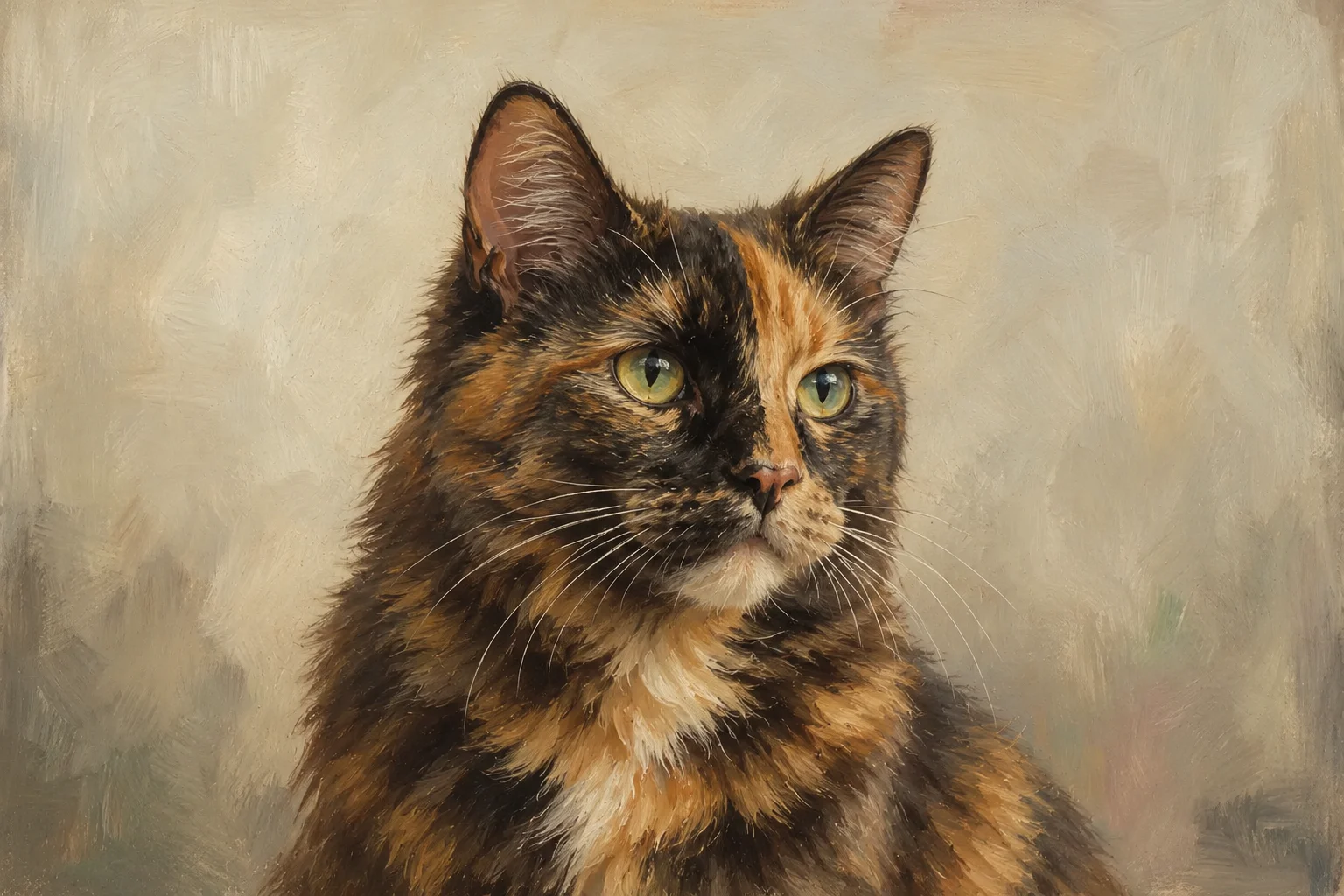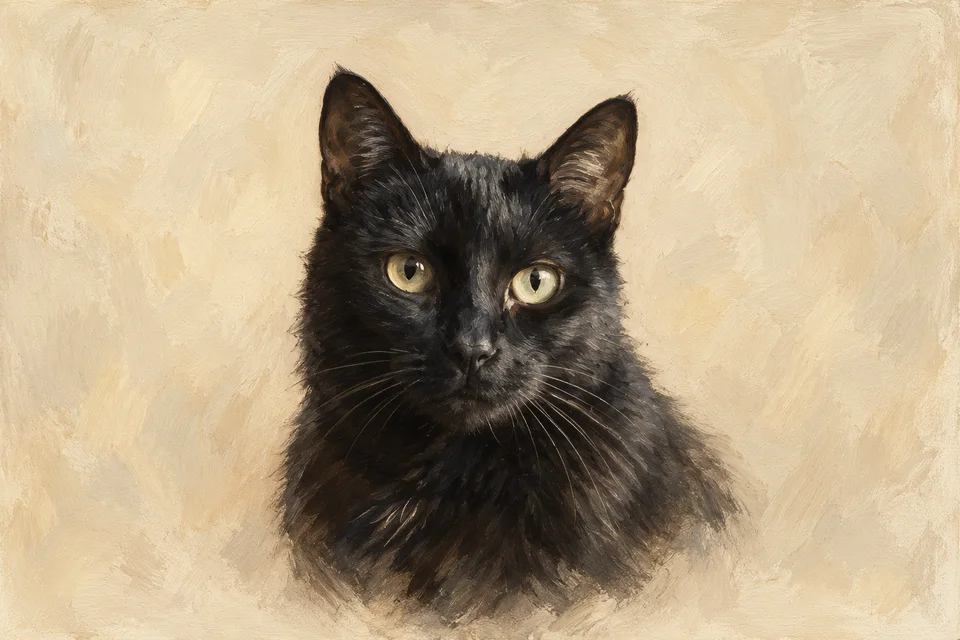
Cats hold a particular place in the house, the chair they called theirs, the sunlit patch they always found, the specific shelf from which they surveyed things. A cat memorial isn't a loud grief. It's a keepsake for the corner of the day they used to occupy. Cat memorials work best when they're particular, when the portrait is made from a photograph of that specific cat, in a painted style, and the words are drawn from what the household knew about them.
Each Small Goodbyes portrait comes in oil, watercolour, charcoal, line or pastel, with a free preview before you pay, and is made to order for your cat. If a friend has lost their cat, see our cat memorial gifts.
Specific, not general
What makes a cat memorial land isn't the overall shape of their life, it's the specific detail. The particular meow they used when the tin opener came out. The way they knocked exactly one object off the table and then looked you in the eye. The spot they hid when the door knocked.
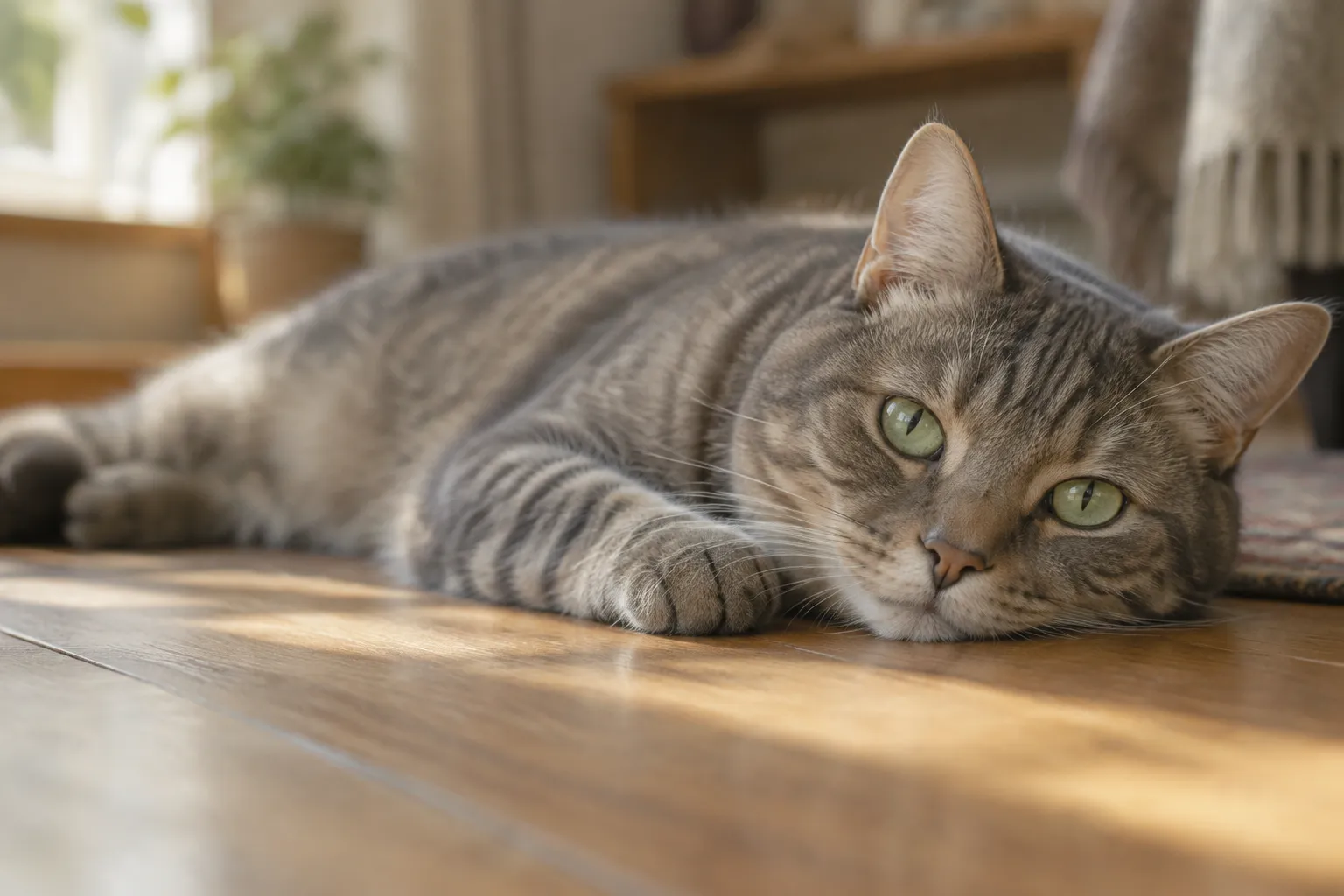
For old cats and young ones
A memorial can be for an elder cat who saw decades of the same family, or for a kitten whose life was too short. Either way, the care is the same. Any age, any breed, any temperament.
For a gift
You can send a cat memorial portrait to someone else, made from a photo of their cat. If you haven't got one, ask someone close to them, or look back through the photos they've shared. It goes straight to their door with no prices in the parcel, and our cat memorial gifts page covers the details. A kind thing to send a friend who has lost their cat.
How delivery works
Nothing is held in stock. The portrait is made from your photograph in a painted style, printed to order and then sent, which is why the estimate is a range, not a date: canvas takes 4 to 9 working days to UK addresses. The estimate is shown before you pay, not after.
What to do if your cat dies at home in the UK
Cats often die at home, and many slip away in their chosen sleeping spot, not at the vet. The practicalities are mostly the same as for a dog, with a few feline-specific details:
- If they died alone, take a moment. A cat that has hidden away to die has done what cats do. There is nothing you should have caught earlier; cats are, biologically, very good at concealing illness. Sit with them for as long as you'd like before phoning anyone.
- Phone your vet. Out of hours, the practice's answering service will tell you what to do. They will arrange collection or guide you on bringing your cat in. If you'd rather do nothing for a few hours, that's also fine.
- Garden burial. Burying a cat in your own garden is allowed in every part of the UK. Wrap them in cotton or wool, not plastic. Many families wrap them in a favourite blanket they always slept on. What the guidance says, nation by nation, is in our guide to burying a pet at home.
- Cremation. Your vet can arrange a private cremation, with your cat's ashes returned, or a communal one. Crematoria differ in how soon they return the ashes, so check when you book. The Association of Private Pet Cemeteries and Crematoria lists members at appcc.org.uk.
- Microchip. If your cat was chipped, contact the database to mark the record deceased. Microchipping became compulsory for pet cats in England on 10 June 2024, and every cat has to be chipped before it reaches twenty weeks old, so most younger cats will be on a register.
- Outdoor cats that don't come home. If your cat was an outdoor cat and you suspect they've passed away outside, contact local councils, vets, and the chip database, many UK councils log deceased cats found on roadsides and check chips before disposal. It's a hard call to make. People at the other end of those phones are usually kind.
The Blue Cross Pet Bereavement line, 0800 096 6606, is free, UK-based, and specific to pet loss. Calls about cats are taken as seriously as calls about dogs.
Honouring a cat that has passed away
Cats are particular animals, and a cat memorial usually wants to be particular in return. Smaller ideas families have found land well: a small framed photograph on the windowsill they always claimed; the specific cushion they slept on, kept as it was, not washed and put away; a candle lit on the anniversary of the day they came home (the arrival, not the departure); a charity donation to Cats Protection in their name. The point isn't to fix the loss. It's to give it a place in the household where it doesn't get pretended away.
A small ceremony works for a cat too, including one with only the people who lived with them. Read a short eulogy if it feels right (we have a guide for writing one). Sit briefly in the sunlit patch they always took. Say their name. The cat won't mind. The household will.
The 3-3-3 rule, and what cats sometimes do before they pass
The 3-3-3 rule is a guideline for adopting a new cat, three days to decompress, three weeks to settle, three months to feel at home, and it gets searched alongside cat-loss queries because grieving owners often consider another cat. There is no equivalent rule for the end. What cats do tend to do is hide. Many will take themselves to a quiet spot, under a bed, in a wardrobe, in the corner of the kitchen, and stop eating a day or two before. They are not asking to be left alone; they are asking to be near, but unobserved. Sitting nearby and letting them be is, for most cats, the right thing.
Memorial quotes for a cat
A short borrowed line is sometimes the right size for a card, a tribute caption, or the closing page at the back of a keepsake. A few that hold their shape:
- "The smallest feline is a masterpiece.", Leonardo da Vinci
- "Until one has loved an animal, a part of one's soul remains unawakened.", Anatole France
- "In a cat's eye, all things belong to cats.", English proverb
- "She wasn't a replaceable kind of cat.", written by us, freely usable. The truest sentence about most cats.
Cat memorial portraits by breed
Most cats in British homes are moggies, and a portrait of a moggy is made exactly the same way: from your photo. For eight breeds and coats people ask about, here is what owners tend to remember and what to look for in the picture.
Bengal
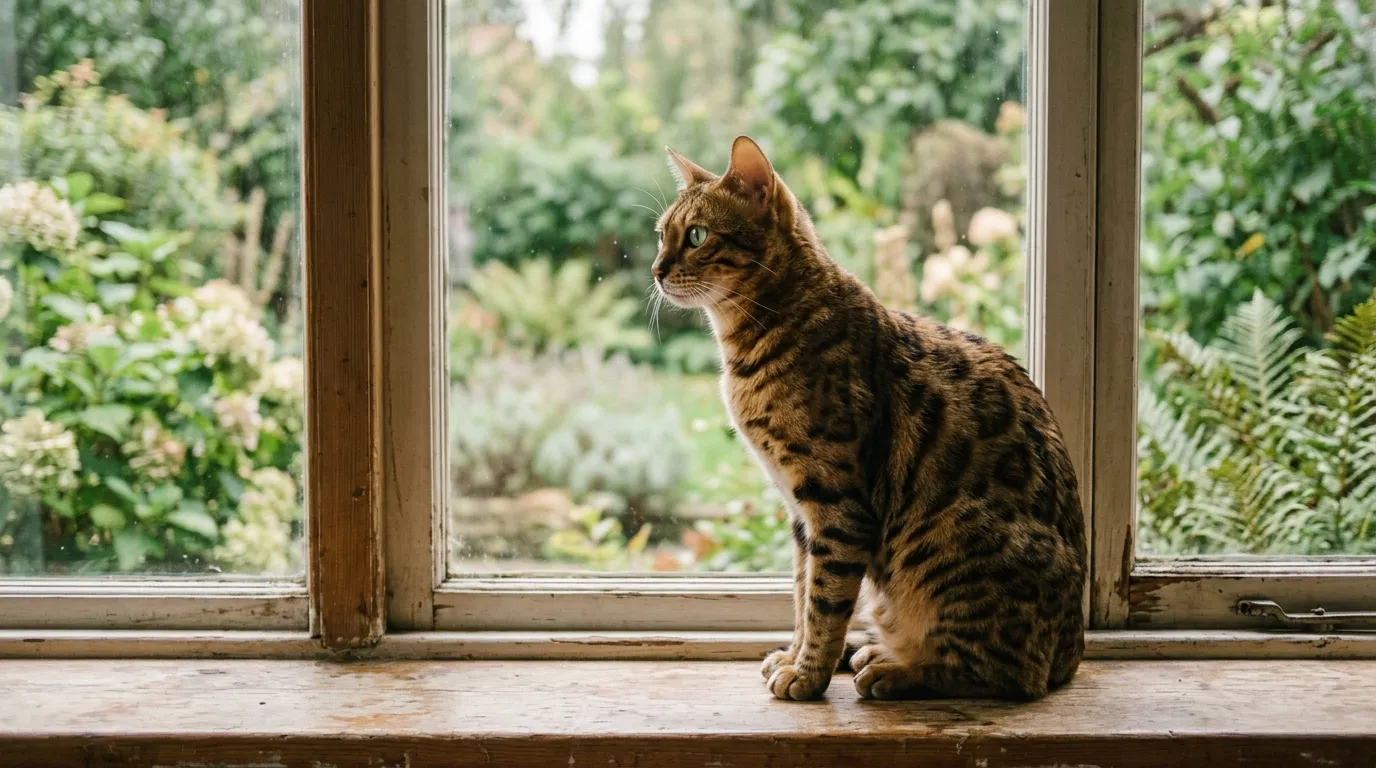
Bengals don't so much live in a house as patrol it: on top of the door, along the curtain rail, on the fridge. They turn on taps to play with the water, chirp and chatter in place of a polite meow, and follow you round to supervise. The spotted, marbled coat looks wild in sunlight. A portrait needs that coat and the green or gold eyes, and a photo taken in good light gives the painted style the most to work with.
British Shorthair
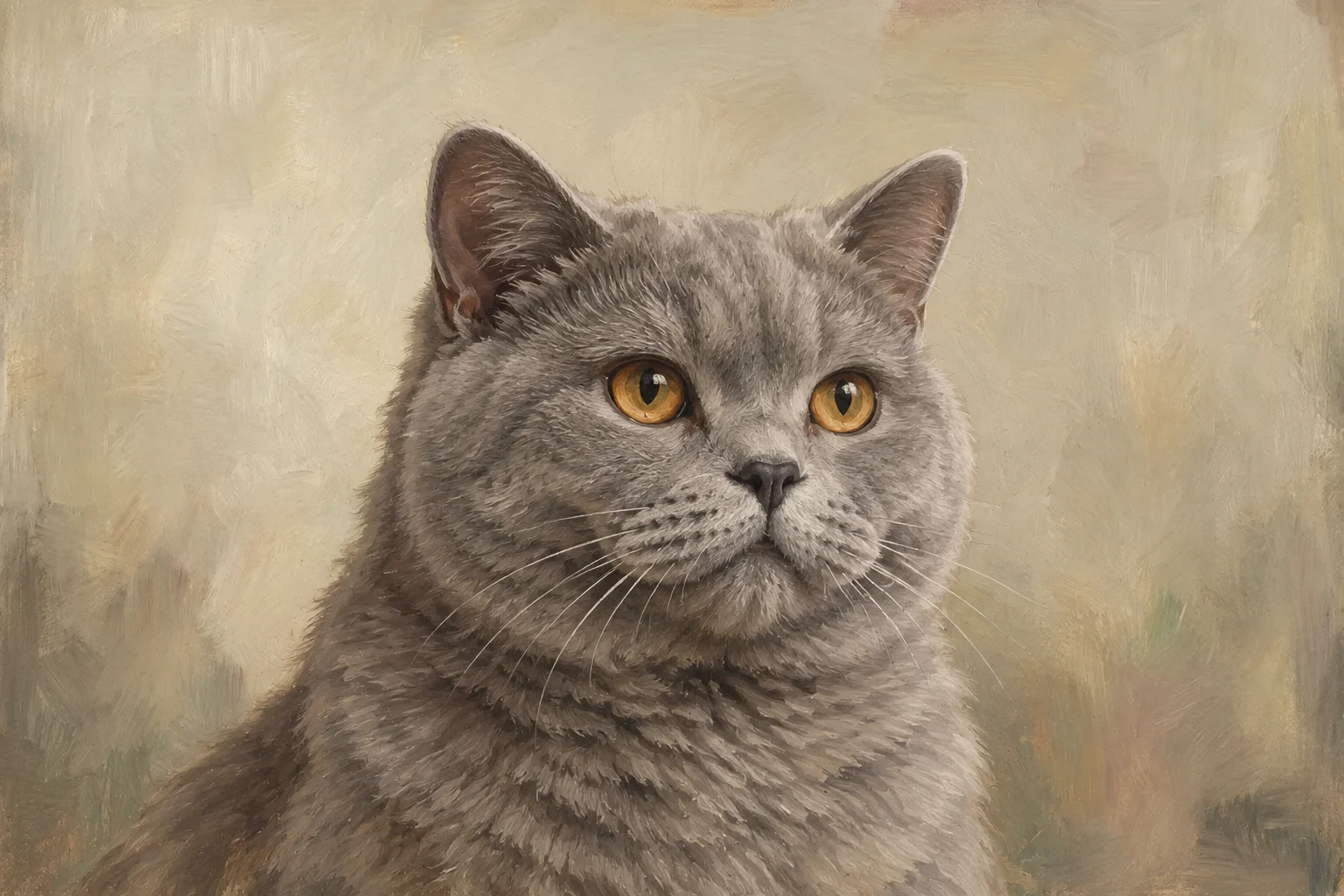
A British Shorthair rarely made a fuss. They sat near you, not on you, took a stroke on their own terms and moved off when they'd had enough. They were a steady presence: the warm end of the sofa, the windowsill in the afternoon. The round face, the dense blue-grey coat and the copper eyes make a calm, solid portrait, which is the right tone for a cat who was always just there.
Maine Coon
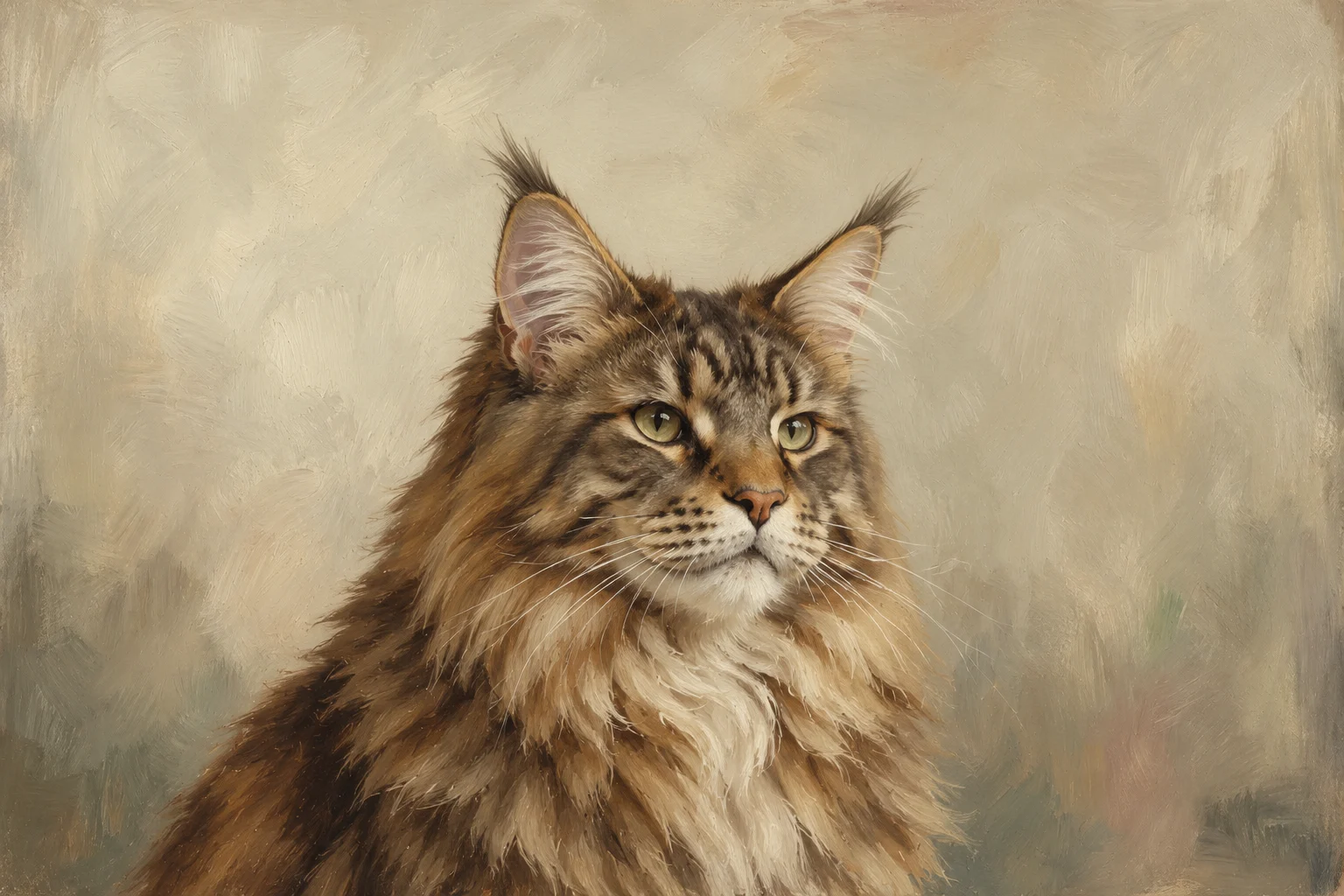
One of the largest domestic cats, with a ruff at the chest, tufted ears and a tail like a feather duster. Maine Coons rarely meow. They chirp and trill, especially when they want you to follow them, and many come when called and sit at your feet like a dog. A photo of them stretched out at full length shows the size, and the long coat paints well in any colour, from brown tabby to silver or solid black.
Persian
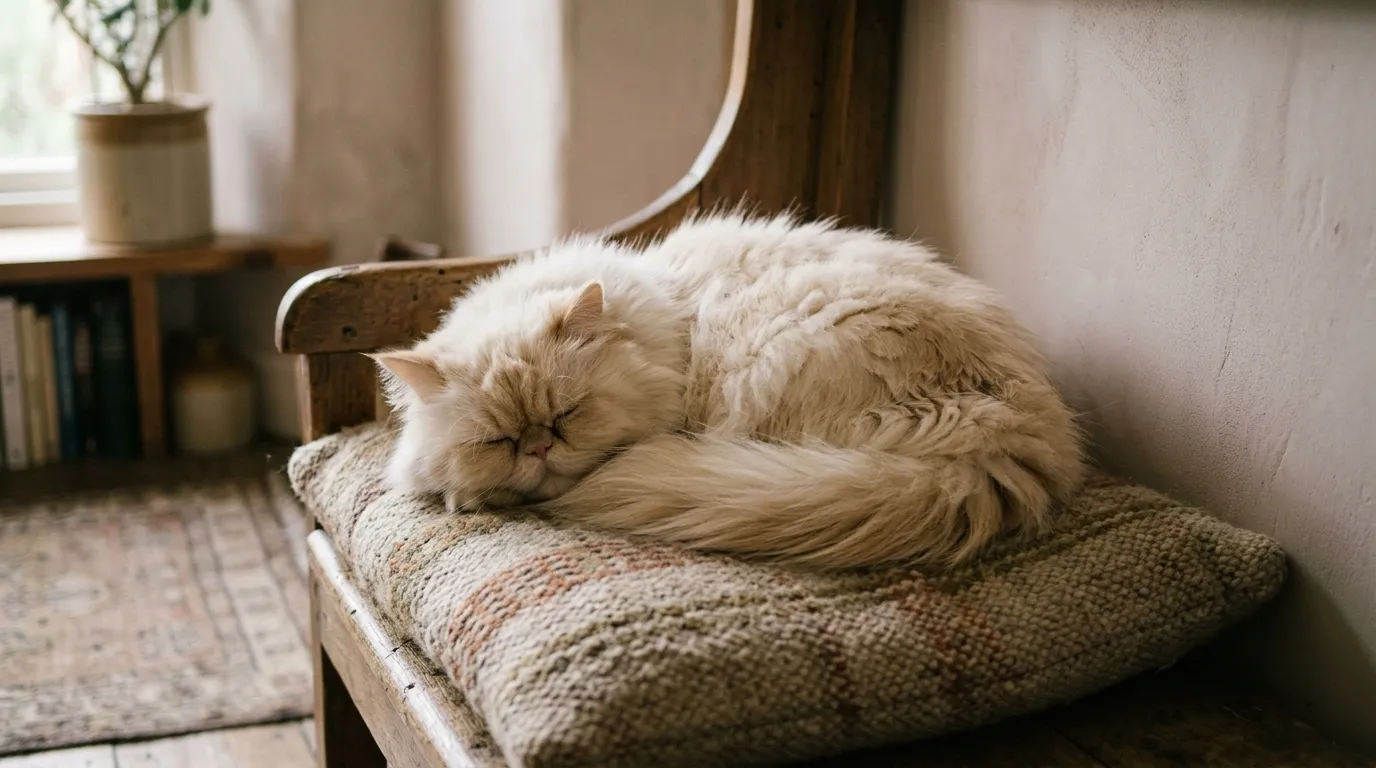
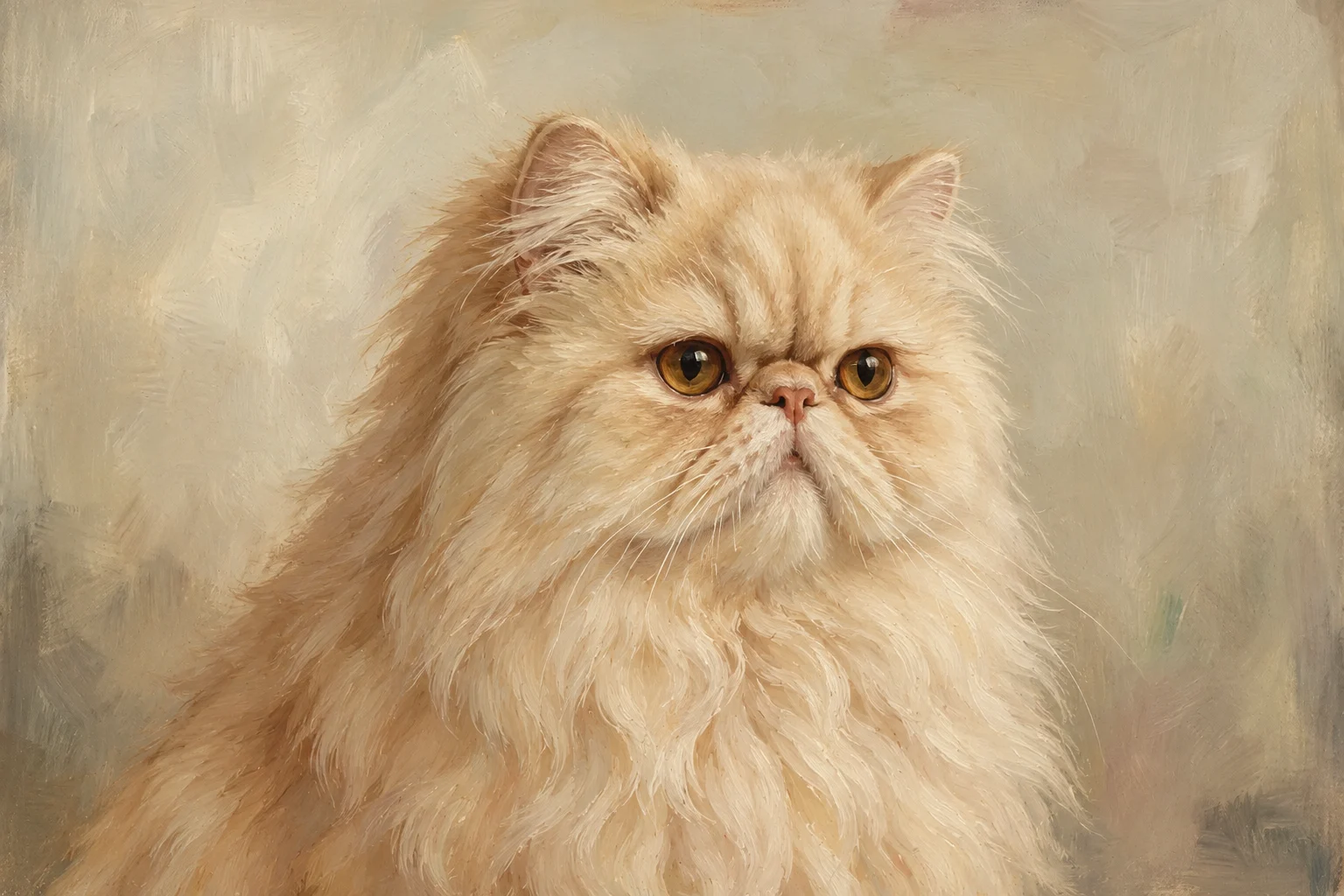
Persians are about the most placid cats you'll meet. No climbing the curtains, no four in the morning sprints, just the warm spot on the sofa, the patch over the heating pipe, or the clean laundry the moment it came out. They let you pick them up and settled wherever you put them down. The long coat often blurs in photos, but a painting gives it weight and light, whether it's silver, cream, blue or a colourpoint.
Ragdoll
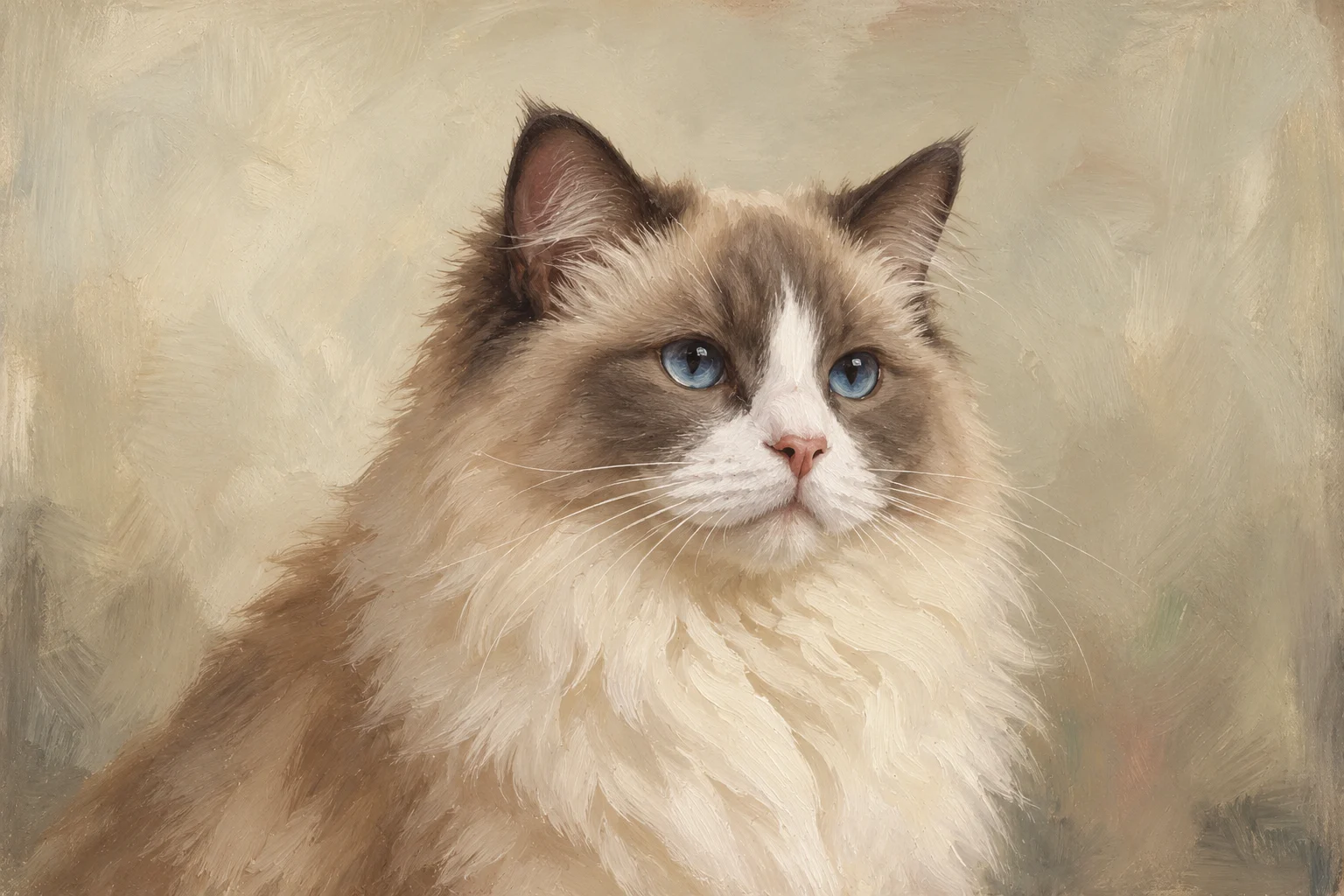
Ragdolls go limp when you pick them up: all four legs hanging, head tucked into your elbow, trusting you completely. They follow you from room to room and wait outside the bathroom door. Most have darker points on the face, ears and tail, and they all have blue eyes, which is usually the first thing anyone notices. A portrait that gets the mask and the eyes right will look like your cat and nobody else's.
Siamese
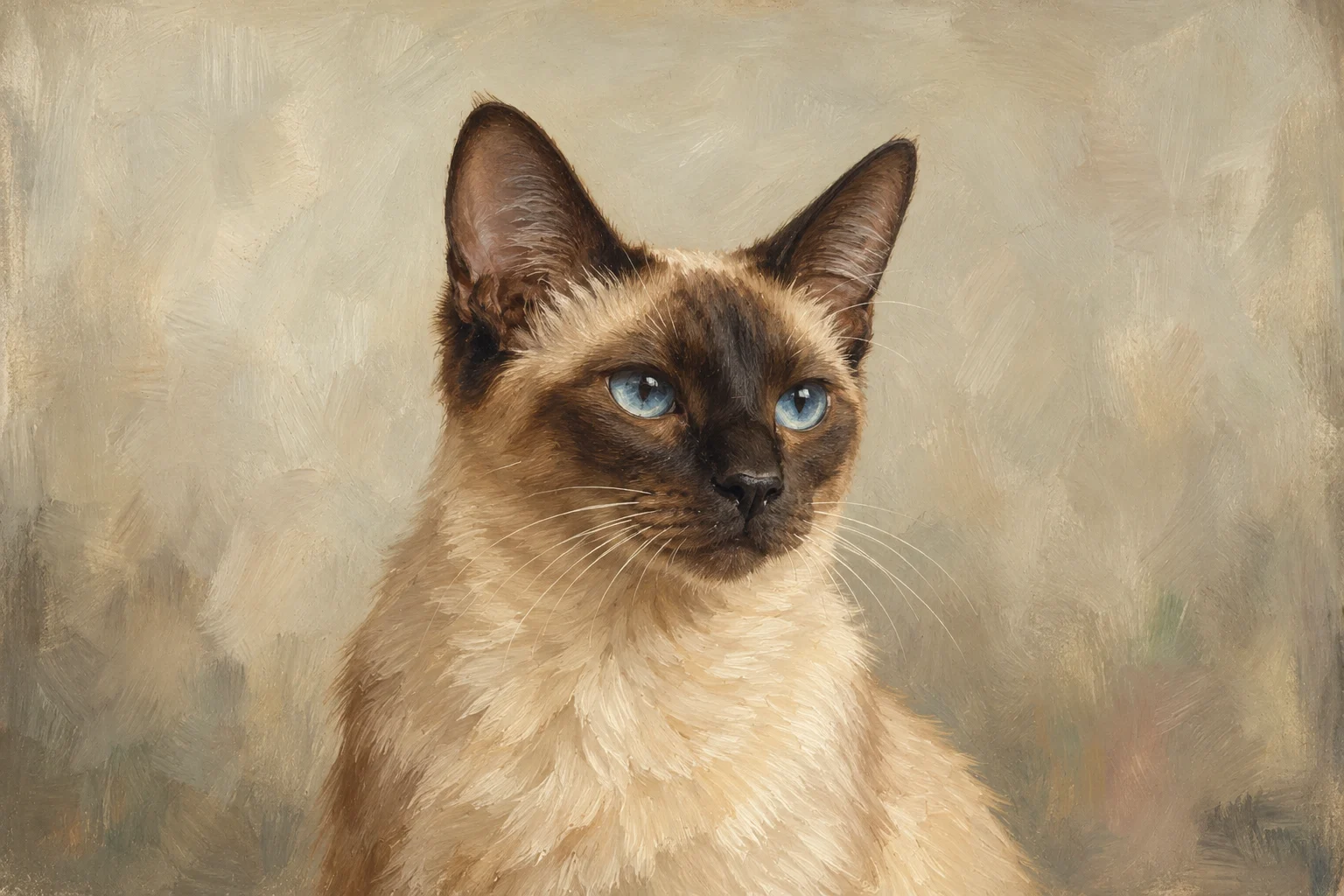
A Siamese runs the house and tells you about it, in a loud, cracked voice that sounds almost human. Owners end up holding whole conversations with them: the cat on the stairs, you in the kitchen. They drape themselves across your shoulders and sit on the keyboard, because that's where the attention is. The pale body, the dark points and the blue almond-shaped eyes are what the portrait has to catch.
Tabby
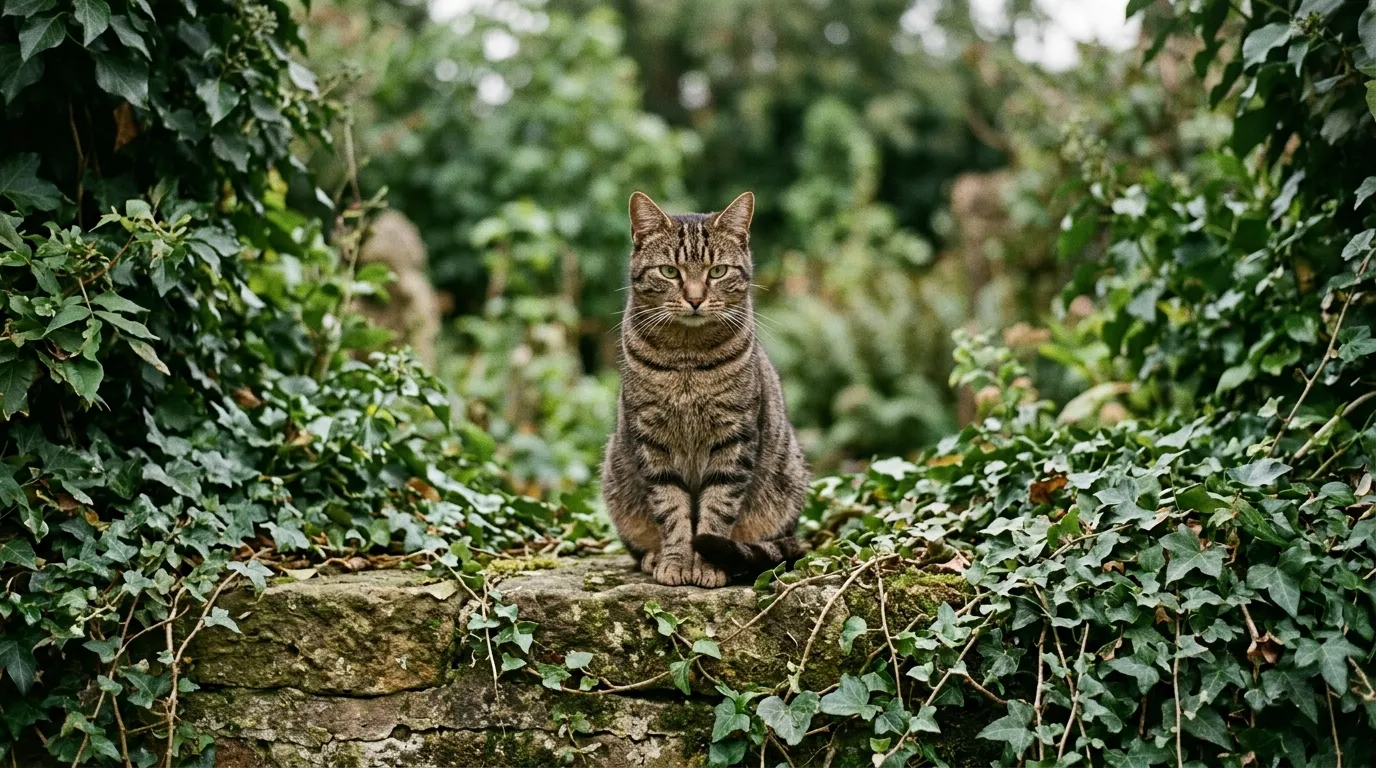
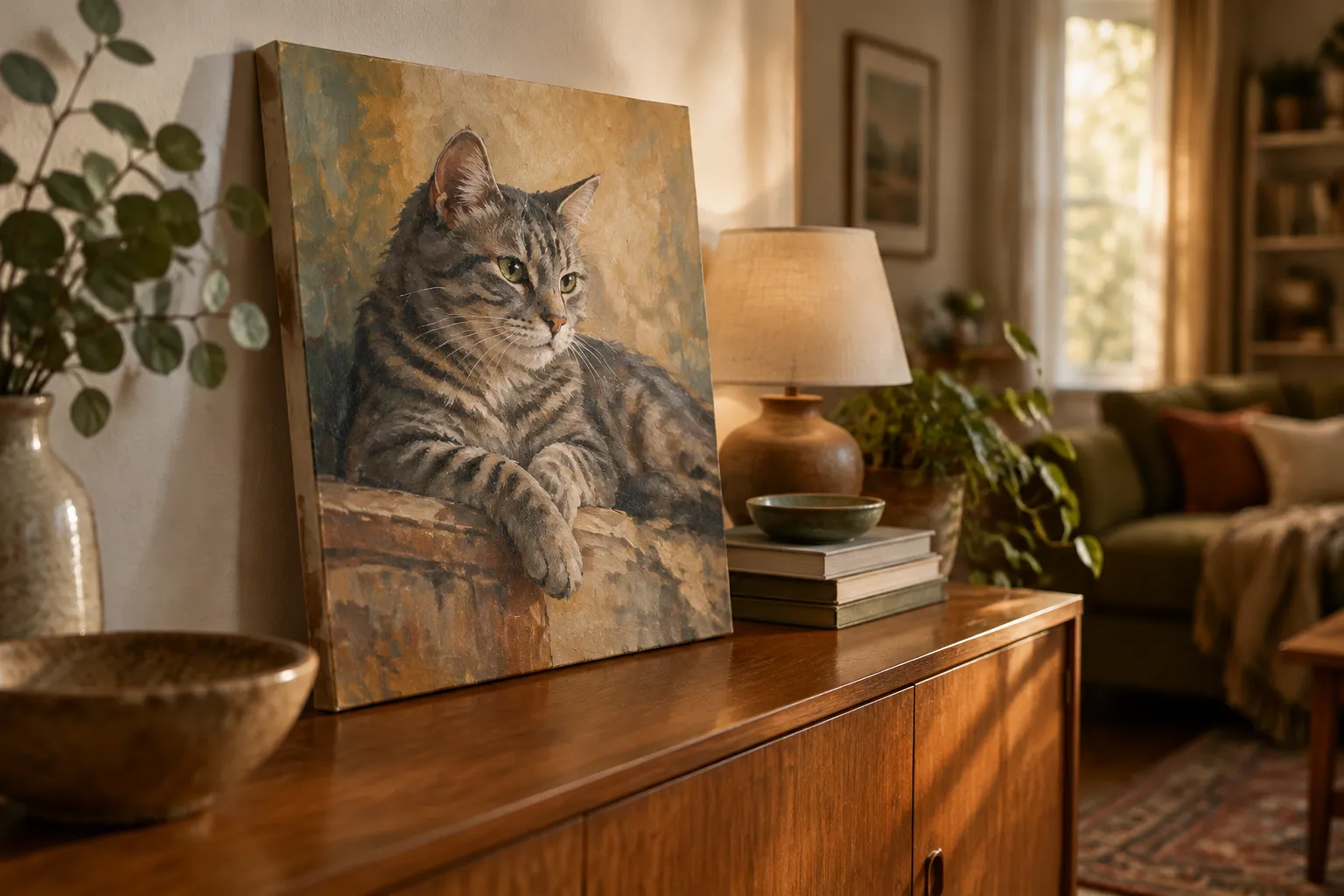
Tabby isn't a breed. It's a coat pattern, and for generations it was simply what a British cat looked like: the brown one on the boiler, the grey one on the back fence. Every tabby has an M on the forehead, and no two wear it the same way. What owners miss is often small and daily, like the chirrup at the back door or the weight against your leg at the same time every evening. The markings are what make a tabby portrait theirs.
Tortoiseshell
Torties come with a reputation, and owners call it tortitude: strong opinions, a flat stare across the kitchen, affection handed out like a favour. Nearly all tortoiseshells are female, because the black and orange colouring is carried on the X chromosome. No two coats share the same map of black, ginger and cream, so the portrait follows your photo patch for patch.