A cat near the end of life usually sleeps more, eats and drinks less, loses weight, stops grooming, struggles to jump or walk, and either hides or wants you close. Several of these signs also come with illnesses that can be treated, so the first call is always to your vet.
The signs to watch for
CVS, which runs vet practices across the UK, lists these on its end-of-life care page:
- sleeping more than usual
- less interest in food and water
- weight loss
- difficulty walking, jumping or using the stairs
- weakness or lethargy
- a dull or unkempt coat, because they groom less
- spending more time alone, or wanting more comfort from you
- changes in toileting, or trouble using the litter tray
- confusion, or seeming less responsive
When it becomes a question of quality of life
Cats Protection's end-of-life leaflet names the situations in which a vet will usually talk to you about quality of life: a cat who cannot eat or drink normally, cannot stand or move normally, has difficulty breathing, has become incontinent, is in pain that cannot be controlled, or no longer grooms or plays. If the pain or distress cannot be relieved, the leaflet calls ending it "the most loving and courageous way you can show them how much you care".
When to put a cat down
There is rarely one clear moment. The PDSA's questions are a fair way in: is your cat still enjoying food and the things they used to do, are they in pain, and are the bad days now outnumbering the good? When the answers lean one way, ask your vet for their view.
What happens at the vet
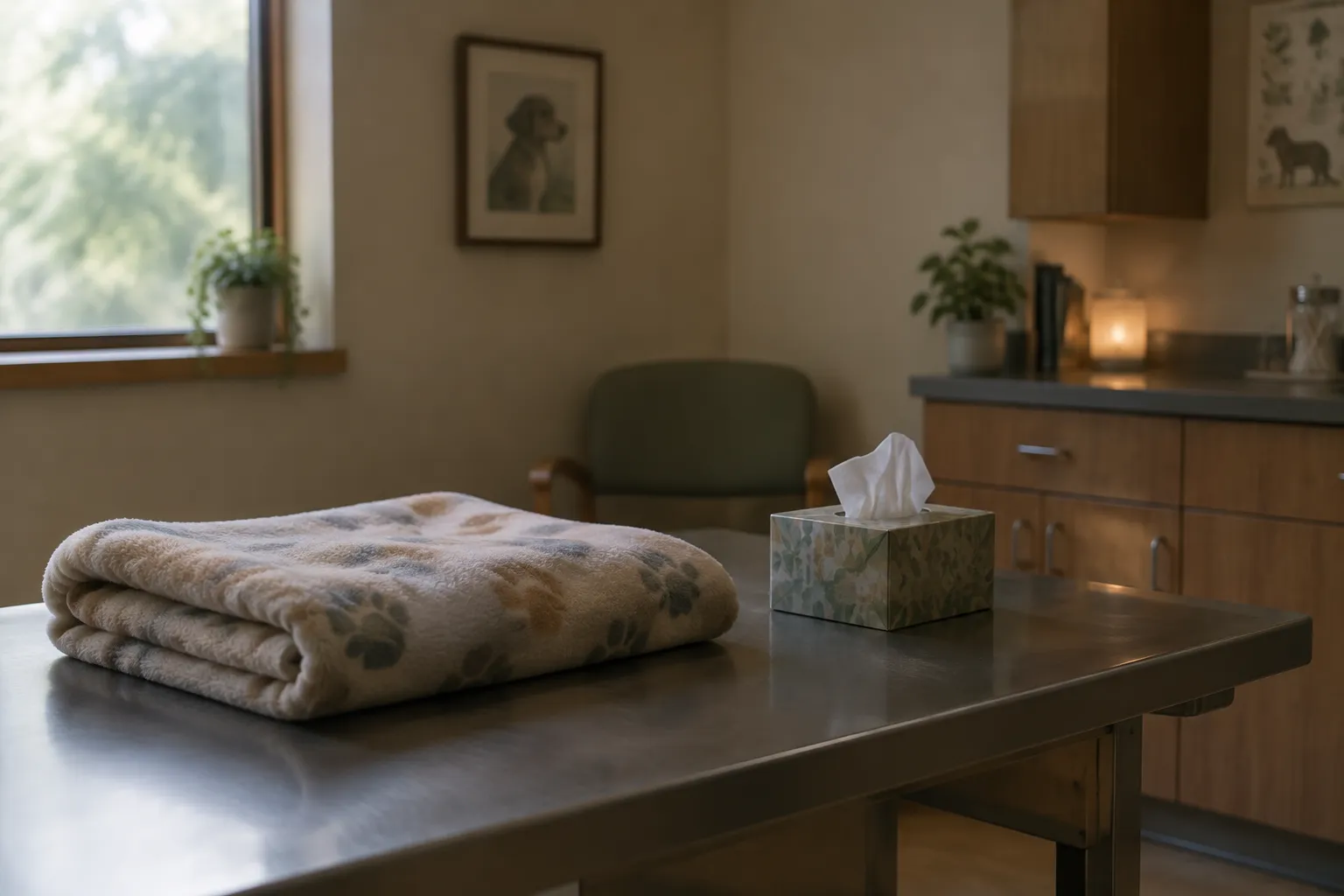
Cats Protection describes it plainly. You sign a consent form. The vet may give a sedative first, then an injection, usually in a foreleg. Apart from a brief pinprick it should not hurt. Your cat loses consciousness and dies quickly; they may take a deep breath, and small twitches afterwards are reflexes, not signs of life. Their eyes usually stay open. Decide with your vet beforehand whether you want to be in the room. They will also ask what you would like to happen afterwards: what pet cremation costs sets out two named crematoria's prices, and burying a pet at home covers the rules if you want to keep them close.
Who to talk to
Cats Protection runs Paws to Listen, a free and confidential grief line, on 0800 024 94 94. Outside its hours the Samaritans answer on 116 123. Our page on pet bereavement support in the UK lists the other free helplines.